Flatbed Towing in Abbotsford: Why It Is the Safest Choice for Highway 1 Breakdowns

Imagine this: it’s a rainy Friday evening, traffic on Highway 1 is bumper-to-bumper, and suddenly your car starts making a loud grinding noise. You manage to pull over near the Mt. Lehman exit, but the shoulder is narrow, and trucks are speeding by just feet away. Your heart races, and you realize – this is exactly the kind of situation no driver wants to be in.

In moments like these, flatbed towing in Abbotsford isn’t just a convenience – it’s a lifesaver. Not only does it protect your vehicle from further damage, but it also keeps you safe while traffic zooms past at highway speeds.

Let’s talk about why flatbed towing is the safest option for Highway 1 breakdowns, and why it matters so much here in Abbotsford.

Highway 1 Breakdowns: Why They’re Risky

Highway 1 moves fast – sometimes faster than drivers expect. Even if traffic slows, it doesn’t mean stopped vehicles are safe. Secondary accidents can happen in an instant if someone brakes too hard, swerves, or isn’t paying attention.

Traditional towing methods, like hook-and-chain or wheel-lift systems, require part of your vehicle to stay on the road during towing. That means the wheels are still spinning or dragging, increasing the risk of damage – and keeping both you and the tow operator exposed to live traffic for longer.

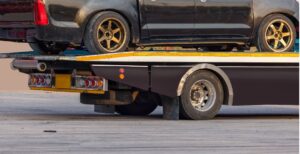
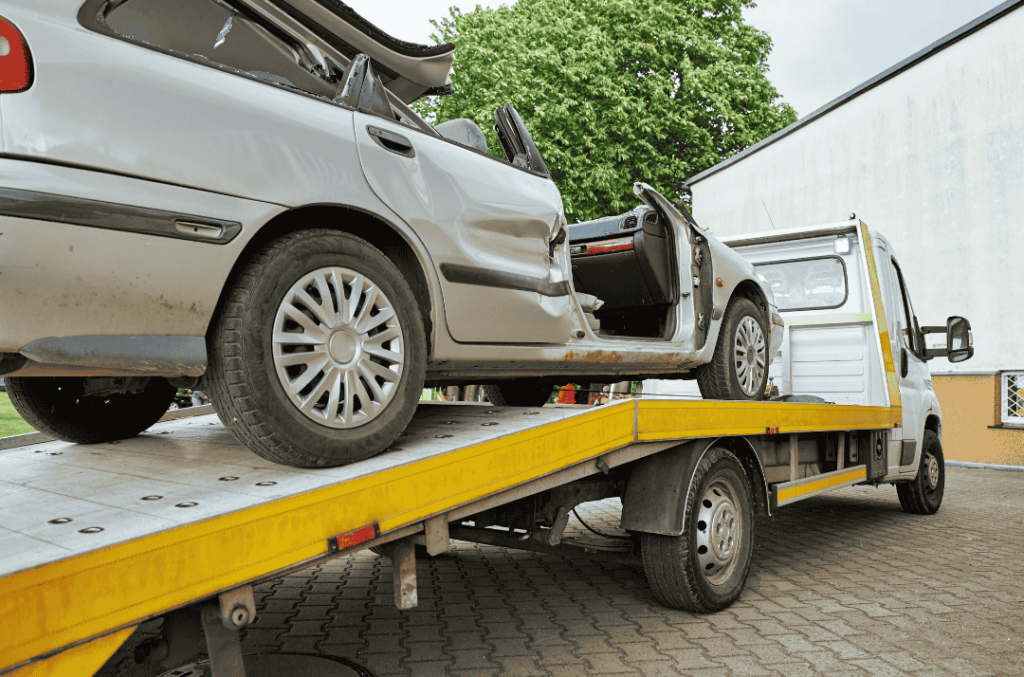
With flatbed towing in Abbotsford all four wheels are lifted off the road. Your car is completely secured on a flat platform, reducing exposure time and keeping both your vehicle and you out of harm’s way. The loading process is smoother, faster, and safer – which is exactly what you need when traffic is moving at highway speeds.

Protecting Modern Vehicles and AWD Cars

Many drivers in Abbotsford and the Fraser Valley own SUVs, crossovers, or other all-wheel-drive (AWD) vehicles. These cars handle rain, snow, and winter roads much better than older models, but they require special care when being towed.

Towing an AWD vehicle with two wheels on the ground can cause serious transmission or drivetrain damage. Even a short tow the wrong way can lead to expensive repairs. That’s why flatbed towing in Abbotsford is strongly recommended for modern vehicles. Lifting all four wheels off the road prevents internal components from straining, ensuring your car arrives at the shop safely.

Luxury vehicles, EVs, 4x4s, and cars with low clearance also benefit from flatbed towing in Abbotsford. Scratches, bumper damage, and suspension strain are far less likely when your car is fully supported by the flatbed platform.

Ideal for Accidents and Roadside Emergencies

Breakdowns often happen without warning. One moment your car is running fine, and the next you’re stranded with a flat tire, engine trouble, or minor collision. Certain spots on Highway 1, like the Mt. Lehman exit or the Whatcom Road interchange, are especially stressful due to heavy merging traffic and industrial vehicles.

Flatbed tow trucks are perfect for:

  • Accident recovery in Abbotsford
  • Emergency towing services
  • Roadside assistance on Highway 1
  • Transporting damaged or non-drivable vehicles

Because the vehicle is fully secured on the flatbed, there’s no dragging, no extra tire wear, and no added strain on suspension or drivetrain components. It’s safer for you, the tow operator, and other drivers passing by.
Peace of Mind When You Need It Most

No one plans for a breakdown, but when it happens, your priority is safety – both yours and your vehicle’s. Being stuck on a busy highway shoulder can be stressful, but choosing flatbed towing reduces risk and offers peace of mind.

Before calling or choosing a towing company, make sure to check online reviews. Reading other customer experiences ensures you’re hiring a professional, reliable service. The right tow truck can turn a potentially dangerous situation into something far easier to handle.

Why Flatbed Towing in Abbotsford Is Worth It

Some drivers may wonder if flatbed towing is “overkill” for minor breakdowns. But the benefits go beyond mere convenience:

  1. Safer in Traffic: All four wheels off the road means less exposure to passing vehicles.
  2. Prevents Damage: Modern cars, AWD systems, and EVs are delicate – flatbeds keep everything secure.
  3. Faster Loading: Flatbed trucks can winch your vehicle onto the platform quickly, reducing risk for you and the tow operator.
  4. Versatile: From accident recovery to non-drivable vehicles, flatbeds handle every scenario.

When it comes to Highway 1, safety should always come first. Flatbed towing in Abbotsford reduces risks for everyone on the road – including you.

Final Thoughts

Highway 1 can be unpredictable, especially through busy Abbotsford exits where traffic moves fast and space is limited. In those moments, the towing method you choose truly matters. Flatbed towing in Abbotsford fully lifts and secures your vehicle, offering stronger protection, better control, and fewer risks during transport.

From protecting sensitive drivetrains to improving roadside safety during loading, flatbed towing provides the level of security modern vehicles require. It’s not just about moving a broken-down car it’s about doing it the right way.

If you ever find yourself stranded along Highway 1, choosing a towing option designed for safety and vehicle protection can make a stressful situation far easier to handle. And remember, always check online reviews before hiring a towing company to ensure you’re working with a trusted, professional service.

Next time you’re on Highway 1, make flatbed towing in Abbotsford your first choice for safety and peace of mind.

Frequently Asked Questions (FAQs):

Q1: Why is flatbed towing safer than other towing methods?
A1: Flatbed towing lifts all four wheels off the road, reducing the risk of accidents, vehicle damage, and exposure to passing traffic.

Q2: Can AWD vehicles be towed with a regular tow truck?
A2: No, towing AWD vehicles with only two wheels on the ground can damage the transmission. Flatbeds are the safest option.

Q3: Are flatbed tow trucks suitable for accidents?
A3: Yes. They’re ideal for accident recovery, roadside emergencies, and transporting non-drivable or damaged vehicles safely.

Q4: How do I choose a reliable towing company in Abbotsford?
A4: Check online reviews to see what other customers say about service, professionalism, and response time.

Q5: Is flatbed towing expensive?
A5: While flatbeds may cost slightly more than older towing methods, the extra protection for your vehicle and safety is worth it.

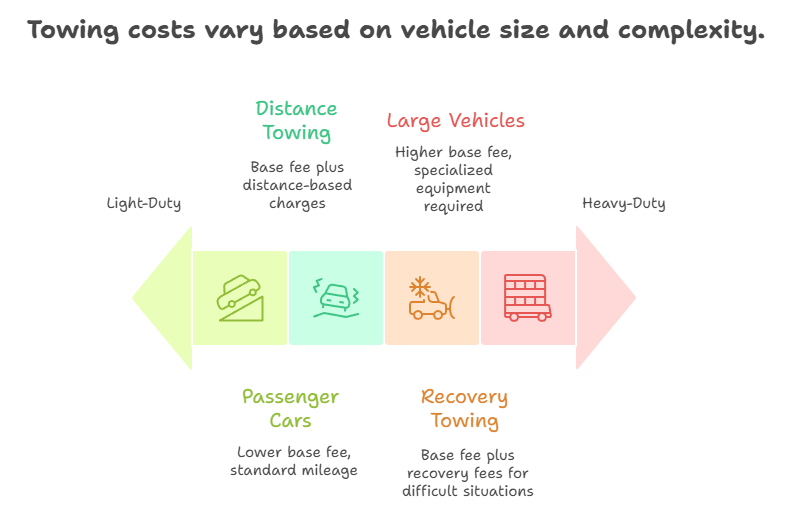
 

2026 Guide to Towing Costs in Abbotsford: Save Money and Avoid Surprises

Imagine this: It’s a crisp winter morning, you’re heading to work on Whatcom Road, and your car refuses to start. You’re stressed, running late, and the first question that pops into your head is probably: “How much is this going to cost me?”

If that sounds familiar, you’re not alone. Many Abbotsford drivers face the same uncertainty when dealing with breakdowns, flat tires, or vehicles stuck in tricky winter spots. The good news? Understanding towing costs in Abbotsford before you actually need one can save a lot of stress, and money.

In this guide, I’ll break down what you can realistically expect in 2026, including typical rates, seasonal factors, ICBC-aligned pricing, and hidden fees that can catch drivers off guard.

Quick Overview: Typical Towing Costs in Abbotsford (2026)

Here’s a snapshot to help you plan ahead:

Service Type Estimated Base Rate Per KM Charge (After 10km)
Light-Duty (Sedans/SUVs) $95 – $135 $3.50 – $5.00
Heavy-Duty (RVs/Semi-Trucks) $250 – $500+ $7.00 – $10.00+
Roadside (Jumpstart/Lockout) $75 – $110 N/A

Notes:

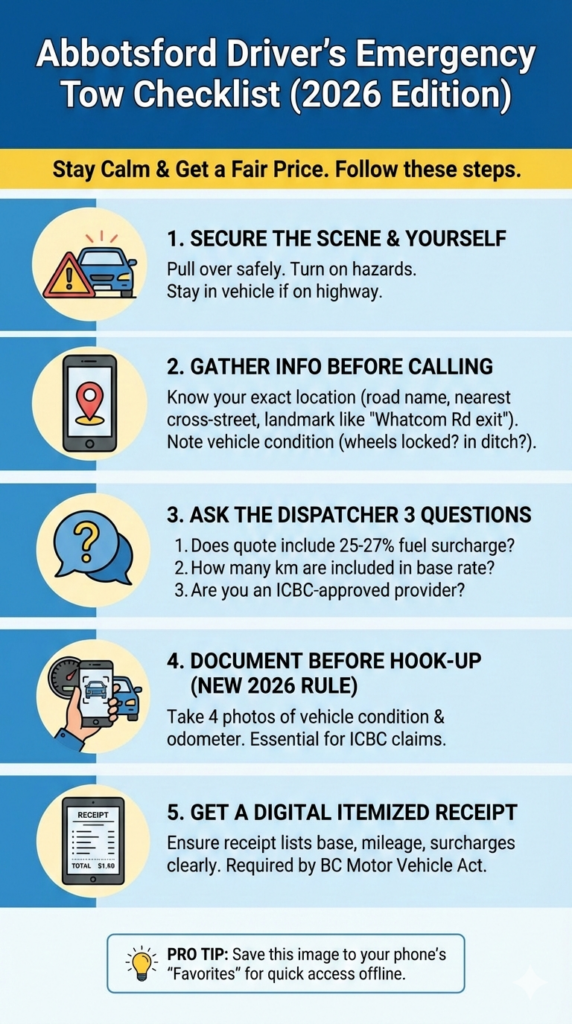
  • Fuel surcharges in 2026 are generally 25%–27%, reflecting BC’s current energy costs.
  • Many towing providers now follow the updated ICBC fee schedule, which keeps pricing consistent across the city.
  • Storage fees at Abbotsford impound yards typically range from $25–$45 per day.

This table is a starting point, but the actual cost can change based on distance, vehicle type, and location-specific challenges.

How Tow Truck Rates Are Calculated in Abbotsford

Towing isn’t just about hooking your car to a truck, several factors affect the final bill.

1. Base Service Call

Every tow starts with a base fee. This covers sending a trained operator and truck to your location. Even if you’re just a few blocks from downtown Abbotsford, this fee ensures you’re getting a professional, equipped crew.

2. Distance-Based Charges

Mileage beyond the first 5–10km is usually billed per kilometre. For example, a tow from Clearbrook to the Sumas Border Crossing will cost more than a downtown short-haul. It’s not just the distance, it’s the time and effort that go into moving your vehicle safely.

3. Seasonal & Local Factors

Abbotsford isn’t flat everywhere. Hills like Whatcom Road or areas in Sumas Prairie can make towing tricky, especially in winter. If your vehicle is stuck in snow or a ditch, expect Recovery Fees, usually $75–$150 per hour or per half-hour, depending on complexity. BC regulations often allow these fees to be charged in 30-minute increments.

4. Light-Duty vs Heavy-Duty Towing

Understanding your vehicle type helps set expectations.

a) Light-Duty Towing

  • Passenger cars, small SUVs, light pickups
  • Generally lower cost: $95–$135 base, plus mileage if over 10km
  • Most downtown or residential tows fall in this category

b) Heavy-Duty Towing

  • Large trucks, commercial vehicles, RVs, buses
  • Requires specialized trucks, additional crew, and safety measures
  • Base rates from $250–$500+, plus higher per-kilometre fees
  • Many providers follow the 2026 ICBC framework, ensuring consistency

After-Hours Towing and Hidden Fees

No one plans for a breakdown at 10 PM or on a holiday, but these situations happen. Here’s what to expect:

  • After-Hours: Usually after 6 PM weekdays, all day weekends. Surcharges are $30–$60, with holidays sometimes higher.
  • Mileage: Beyond the base distance, $3.50–$5 per km for light-duty, $7–$10+ for heavy-duty.
  • Recovery & Winching: Vehicles off-road or stuck in snow may require specialized extraction. Fees: $75–$150 per hour or half-hour, depending on difficulty.

Knowing these potential costs beforehand allows you to make informed decisions and avoid unpleasant surprises.

Real Scenarios Abbotsford Drivers Face

Here are examples that make the numbers relatable:

  1. Downtown sedan won’t start during business hours: Likely a light-duty tow at ~$95–$135.
  2. SUV stuck in rural Clearbrook: Might require recovery, extra mileage, or even winching, potentially $150–$300 total.
  3. Heavy-duty truck off the highway near Sumas Border Crossing during a snowstorm: After-hours surcharge plus recovery fees could push the cost beyond $500.

Seeing these scenarios helps illustrate why towing prices aren’t always straightforward.

Tips to Avoid Surprises

  • Ask for an estimate before authorizing a tow.
  • Know your insurance or roadside assistance coverage.
  • Keep emergency contacts and winter essentials handy.
  • Maintain your vehicle regularly to reduce breakdown risk.

In BC, tow companies must provide an itemized receipt, and most adhere to Motor Vehicle Act regulations for impoundments. This builds trust and protects you as a consumer.

Conclusion

Breakdowns are never convenient, but understanding towing costs in Abbotsford can reduce stress and help you make informed decisions. From base rates and mileage to fuel surcharges, after-hours fees, and recovery costs, knowing what to expect means fewer surprises and more confidence on the road.

So next time your car decides to take a break on Mt. Lehman or Whatcom Road, you’ll know exactly what to expect – and you won’t be left guessing.

Abbotsford Towing: Frequently Asked Questions

Q1. Can I negotiate towing prices?

A: Generally, no for emergencies (which follow ICBC-aligned rates), but yes for “planned tows.”

Tip: Ask for a “flat rate” if you are moving a car to a shop later in the week rather than immediately.

Q2. Does my car insurance cover the cost?

A: Yes, most ICBC Optional and private plans (BCAA, etc.) reimburse towing.

Requirement: You must keep an itemized digital receipt to claim your refund in 2026.

Q3. Can electric vehicles (EVs) be towed safely?

A: Yes, but they require a flatbed truck to prevent battery damage.

Action: Always tell the dispatcher “It’s an EV” so they don’t send a standard hook truck.

Q4. What happens if my car is impounded in Abbotsford?

A: It will go to a secure lot (usually in Clearbrook or Peardonville).

Cost: Expect $25–$45 per day plus a release fee. You’ll need ID and proof of ownership.

Q5. How long is the wait for a tow truck?

A: Usually 20–40 minutes in central Abbotsford.

Warning: Wait times can double during snowstorms or major accidents on Highway 1.

Q6. Can I choose which towing company shows up?

A: Yes. Even if the police are on-site, you can request your preferred local provider.

Check: Ensure they are an ICBC-approved provider for 2026 to guarantee fair pricing.


Towing in Abbotsford During the Holiday Season: What You Need to Know

The holiday season is an exciting time in the Fraser Valley – roads are busier than usual as families travel, shoppers move between malls, and friends catch up for festive gatherings. But winter weather in Abbotsford can make even a short drive unpredictable. Freezing rain, occasional snow, and fog can turn familiar roads into tricky situations in an instant.

This is where understanding towing in Abbotsford becomes essential. Knowing how local towing and roadside assistance operate during the holidays can save time, stress, and sometimes even your safety.

According to ICBC data, December is one of the most dangerous months for B.C. drivers, with nearly 35 crashes reported every hour across the province. This increased risk is felt directly on Fraser Valley roads, including busy local routes and rural stretches alike.

Why Towing Calls Increase in Abbotsford During the Holidays

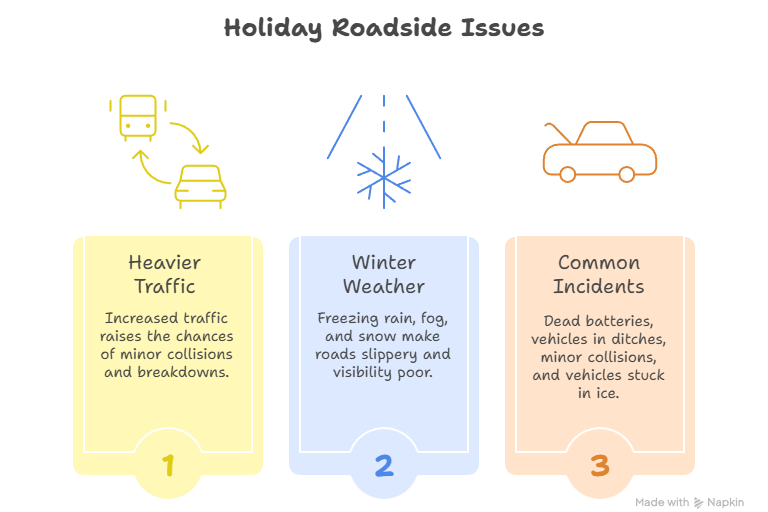
1. Heavier Traffic and Holiday Hustle

During the holiday season, roads are busier than usual. From last-minute shopping trips to family visits across the Fraser Valley – including Chilliwack, Langley, and Vancouver – the increased traffic naturally raises the chances of minor collisions, breakdowns, and other roadside issues.

In Abbotsford specifically, areas like the High Street Shopping Centre and the nearby Mt. Lehman Road/Highway 1 interchange see predictable congestion and minor fender-benders starting the second week of December. The increased traffic particularly affects major arteries like the Trans-Canada Highway (Highway 1), Sumas Way, and the Abbotsford-Mission Highway, where even small incidents can quickly create delays.

2. Winter Weather Challenges

Abbotsford experiences a mix of winter conditions, including freezing rain, fog, and occasional snow. These conditions can make roads slippery and visibility poor, especially at night. Sudden temperature drops can also catch drivers off guard, leading to vehicles sliding off rural roads or getting stuck in snow and ice.

3. Common Holiday Incidents

Some of the incidents that frequently lead to calls for tow truck services include:

  • Dead or drained batteries
  • Vehicles stuck in ditches
  • Minor collisions on busy roads
  • Vehicles immobilized by ice or snow

By knowing what to expect, you can reduce the stress if an incident occurs and be better prepared to contact roadside assistance in Abbotsford.

Common Winter Roadside Problems Drivers Face

Winter can bring specific challenges even if Abbotsford doesn’t receive heavy snowfall. Local drivers often experience:

1. Battery Failures

Cold temperatures drain car batteries faster. Many drivers require a battery boost, especially early in the morning or after leaving a vehicle parked overnight.

2. Vehicles Sliding or Getting Stuck

Even small patches of ice can cause cars to slide into ditches or off the road. Quick recovery often requires specialized equipment and experience.

3. Tire and Engine Issues

Low tire pressure, worn tires, or frozen locks are common winter annoyances. Drivers might notice reduced traction or difficulty starting their engines in cold conditions.

By understanding these common problems, you can anticipate potential issues before they turn into emergencies.

How Towing Services Operate Differently During the Holiday Season

During the holiday season, towing companies face unique challenges. Roads are busier, winter conditions make travel unpredictable, and emergencies can happen at any hour. Knowing how towing services operate differently during this time can help drivers feel prepared and confident.

1. 24/7 Availability for Peace of Mind

Holiday traffic often extends into late nights and early mornings, and winter conditions like icy patches or fog can make driving riskier. Local towing companies maintain round-the-clock service so help is always within reach. This ensures that if your vehicle fails on a slippery road or in a rural area, assistance is available quickly.

2. Winter-Ready Equipment

Winter driving requires more than a standard tow truck. Tow vehicles are often equipped with:

  • Winches to pull cars out of ditches or snowbanks
  • Flatbeds for safe transport of low-clearance or damaged vehicles
  • Traction tools and chains for slippery roads
  • Extra lighting for early morning or evening recoveries

Having properly equipped tow trucks ensures safe recovery when vehicles get stuck in snow, ice, or slush.

3. Faster Response Times with Local Knowledge

A towing company familiar with local roads can reach stranded drivers faster. They know busy streets, tricky intersections, and rural shortcuts that outsiders might miss. During winter, this local expertise is invaluable for safe and timely assistance.

What to Do If You Need a Tow During a Snowstorm or Winter Emergency

When winter strikes, safety is the most important priority. Here’s how to handle a roadside emergency:

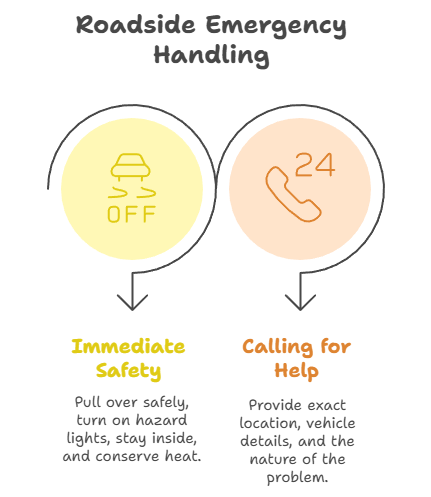
1. Immediate Steps for Safety

  • Pull over safely to the shoulder or a well-lit area.
  • Turn on hazard lights to alert other drivers.
  • Stay inside the vehicle unless conditions make it unsafe.
  • Conserve heat and fuel by running the engine intermittently.

2. Calling for Help

Provide your towing company with clear details:

  • Exact location: (mention nearby landmarks when possible: “just past the Abbotsford International Airport entrance on Mt Lehman Road” is more precise than “Mt Lehman Road”)
  • Vehicle type and condition
  • Nature of the problem (e.g., stuck in a ditch, dead battery)

Local roadside assistance can reach you faster, especially during busy holiday periods or snowstorms.

Winter Safety and Preparedness Tips

Being prepared for winter conditions can make driving safer and reduce stress if unexpected issues occur. Local towing companies see that drivers who plan ahead often have an easier experience on the road. Here’s how to be ready:

a) Winter Kit Essentials

Keeping a small winter kit in your car can make waiting for assistance safer and more comfortable:

  • Blankets and warm clothing
  • Gloves and hats
  • Phone charger or power bank
  • Sand, kitty litter, or traction mats for extra grip

b) Proactive Vehicle Checks

Simple steps before heading out can prevent common winter problems:

  • Check tire tread and maintain proper pressure. (Note: BC law requires tires to have at least 3.5 mm tread depth on designated routes.)
  • Inspect your battery, as cold weather can drain it faster
  • Keep your fuel tank at least half full
  • Replace worn wiper blades and use winter washer fluid
  • Plan routes in advance and monitor weather conditions

These preparations don’t replace the need for professional towing when emergencies happen, but they help drivers stay safe and make it easier for tow trucks to reach them quickly and efficiently.

Conclusion: Stay Safe and Prepared This Holiday Season

Towing in Abbotsford during the winter holidays can be a lifesaver when unexpected situations arise on icy roads or busy streets. By understanding how local towing services operate, preparing your vehicle for winter conditions, and having a trusted contact on hand, you can travel with greater confidence and peace of mind.

Whether it’s a quick battery boost, a vehicle recovery from a ditch, or a standard tow, knowing you have reliable help nearby makes all the difference. Staying informed and ready ensures your holiday travels are safe, smooth, and stress-free.

FAQs

Q1. Are winter tires mandatory in Abbotsford?
A: Not in the immediate Lower Mainland, but highly recommended for cold snaps. On most major highways outside Abbotsford (e.g., Hope, Merritt, mountain routes), winter tires are required from October 1 to April 30. Legal tires must have the Mountain/Snowflake symbol or M+S and at least 3.5 mm tread.

Q2. Does ICBC cover roadside assistance or towing?
A: Basic Autoplan does not cover general roadside assistance. Optional Roadside Plus reimburses up to $50 per qualifying non-accident emergency, like a battery boost or tow.

Q3. What is the difference between towing and recovery services?
A: Towing moves a disabled vehicle from an accessible location (like a road or parking lot). Recovery involves extracting vehicles from ditches, snow, or accident sites and requires specialized equipment, making it more complex and costly.

Q4. How is the cost of towing typically calculated?
A: Fees usually include a base hook-up charge plus a per-kilometer rate. Extra charges may apply for winching, after-hours/holiday service, or storage if the vehicle cannot be immediately dropped off.

Q5. What is a “Drop Charge” and can I avoid it?
A: A Drop Charge is applied if the tow truck is hooked up and you request the vehicle to be released before transport. In breakdowns or accidents, you should only pay the agreed-upon towing fee with your chosen provider.

Towing Insurance in Abbotsford: A Thoughtful Winter Present

A Holiday Gift That Truly Matters

The holiday season is here, and with it comes the familiar challenge of finding the perfect gift. While gadgets and festive treats are fun, some of the most meaningful gifts are those that offer safety, convenience, and peace of mind.

This year, consider something different – towing insurance in Abbotsford. For loved ones who spend a lot of time on the road, from daily commutes to winter trips through Mission or Hope, access to emergency towing and roadside assistance is one of the most thoughtful presents you can give.

Understanding Towing Insurance in Abbotsford

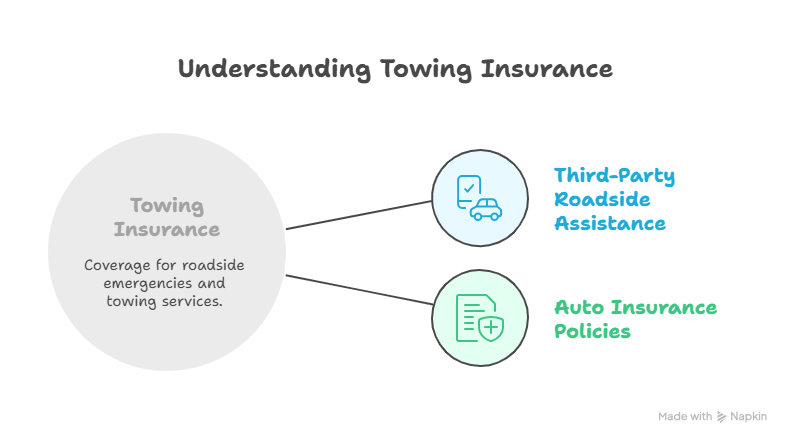
The term “towing insurance” can be confusing. It doesn’t mean the towing company provides the policy itself. Instead, coverage is typically obtained through:

  • A third-party roadside assistance membership (like CAA or BCAA)
  • Existing auto insurance policies that include roadside or towing coverage

This coverage ensures that in the event of a breakdown, flat tire, dead battery, or other roadside emergency, professional help is available. Understanding towing insurance in Abbotsford helps drivers make informed decisions and ensures peace of mind, whether commuting locally or taking longer drives across the Fraser Valley.

Why Winter Driving in BC Demands Towing Coverage

Driving during the winter months can be stressful. Even short trips across Abbotsford’s busy streets or longer drives through Mission’s icy highways can turn risky in a blink. Holiday traffic adds another layer of unpredictability.

Towing insurance isn’t just for accidents, it’s a safety net for the unexpected: flat tires, dead batteries, or getting stuck in the snow. For those traveling to Hope or taking long drives across the Fraser Valley, access to emergency towing and roadside assistance ensures help is never far away.

What Towing Insurance Covers

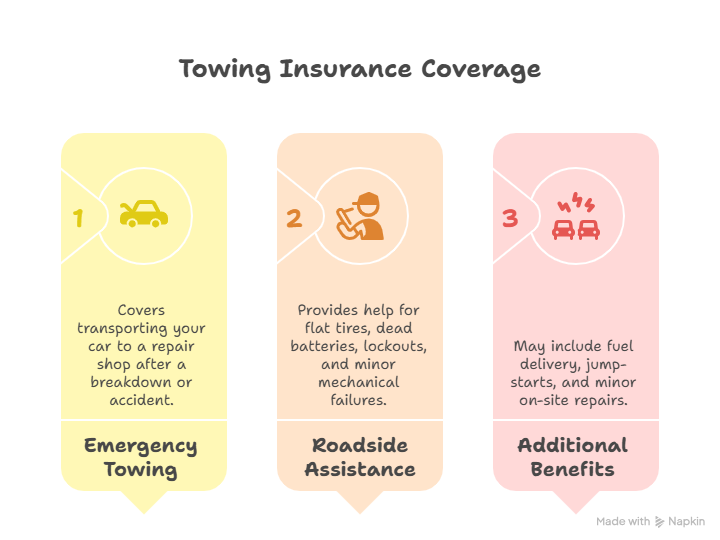
1. Emergency Towing When You Need It Most

If your vehicle breaks down or you’re involved in a winter incident, towing insurance covers the cost of safely transporting your car to a repair shop. This coverage is essential for drivers navigating icy roads in Abbotsford, winding routes in Mission, or rural stretches near Hope.

2. Roadside Assistance for Everyday Emergencies

Winter driving isn’t just about accidents, it’s about everyday challenges that can leave you stranded:

  • Flat tires in the middle of a cold night
  • Dead batteries when starting your car in freezing temperatures
  • Lockouts or minor mechanical failures

Reliable roadside assistance ensures that whether you’re in a city centre or a more remote area, help is only a call away.

3. Additional Benefits That Keep You Moving

Some policies include extras like fuel delivery, jump-starts, and minor on-site repairs. For winter drivers, these services mean fewer delays and safer trips across Abbotsford and beyond.

How Towing Insurance Works

Step-by-Step Protection

  1. Call for help: Reach out to your roadside assistance or towing service provider immediately after an incident.
  2. Provide details: Share your location and the situation with your vehicle.
  3. Safe transport: A tow truck arrives to move your car to a repair shop or safe location.

Towing insurance covers urban areas like Abbotsford and Mission, as well as rural stretches near Hope, giving drivers peace of mind year-round, not only during winter or holiday travel.

Seasonal Note: During winter or busy holiday travel, having this coverage ensures that icy roads, snow, or high traffic don’t leave you stranded without assistance.

Who Benefits Most from Towing Insurance

1. Daily Commuters

Winter mornings can be stressful for those commuting daily in Abbotsford. Emergency towing and roadside assistance offer reassurance during unexpected breakdowns.

2. Teenagers and New Drivers

For teens or new drivers navigating icy roads, towing insurance provides confidence, knowing help is available if something goes wrong.

3. Seniors and Experienced Drivers

Even seasoned drivers can face winter surprises. Coverage gives seniors and long-time drivers alike the support they need, whether traveling across Mission’s highways or making local trips in Abbotsford.

Why Towing Insurance Makes a Thoughtful Winter Gift

Unlike most holiday gifts, towing insurance in Abbotsford is practical, long-lasting, and deeply meaningful. Whether it’s a spouse commuting daily to work, a parent running errands, or a teen learning to navigate winter roads, this coverage offers reassurance.

Your gift quietly says: “I care about your safety, wherever the road takes you.” With emergency towing and roadside assistance, loved ones won’t have to worry about being stranded by a flat tire, battery failure, or a winter incident, they’ll know professional help is only a phone call away.

Tips for Using Towing Insurance in Abbotsford

a) Know What’s Covered

Before gifting or using towing insurance, check the plan details: what incidents are included, coverage limits, and whether services like lockouts or flat tires are covered.

b) Accessing Emergency Services

Most providers offer multiple ways to request help — via phone, mobile app, or roadside assistance alerts. Make sure loved ones know how to access services quickly.

Conclusion

Winter in Canada is beautiful, but it’s unpredictable. Having towing insurance in Abbotsford ensures drivers have support when it matters most. From emergency towing to roadside assistance, every trip becomes safer and less stressful.

Whether gifting coverage to a loved one or securing it for yourself, this winter, make peace of mind the most meaningful gift.

Need towing this winter? Contact MSA 24/7 Towing at 604-870-8697 for professional and reliable towing and keep your family and vehicles safe wherever the road takes you. Visit our site for more information.

FAQs

Q1. How does towing insurance differ from standard car insurance?
A:
Standard insurance may cover damages but often excludes roadside assistance. Towing insurance covers emergency towing, winter incident support, and minor roadside help.

Q2. Can I get coverage for long drives across BC?
A:
Yes. Most plans cover urban and rural areas.

Q3. Does towing insurance operate during snowstorms?
A:
Absolutely. Emergency towing and roadside assistance are available year-round, including during severe winter weather.

Q4. Is multiple-vehicle coverage available?
A:
Many providers allow multiple vehicles under one plan, ideal for families or businesses with multiple drivers.

Towing Service in Abbotsford: What Your Dashboard Lights Are Really Trying to Tell You

You’re out driving through Abbotsford, maybe on South Fraser Way or heading toward Sumas Mountain on a warm afternoon, when a dashboard light suddenly flicks on.

And now you are wondering:

“Is this something serious? Should I pull over? Do I need a towing service in Abbotsford, or can I make it home?”

We’ve all been there, and the truth is, those little lights on your dash aren’t just there to annoy you. They’re your car’s way of saying, “Hey, something’s not right here.” But how do you know which lights are minor, and which ones are code red?

In this blog, I’ll break it down, what your dashboard lights are really trying to tell you, when to keep driving, and when it’s time to call for a tow or roadside assistance before things go from bad to worse.

Red Lights: The Warnings You Should Never Ignore

Dashboard lights are your vehicle’s way of communicating, and while some are simply alerts or maintenance reminders, red warning lights are in a category of their own.

When a red light appears on your dash, it usually signals a serious issue that requires immediate attention. Ignoring it, even for a short drive, can lead to costly damage or leave you unexpectedly stranded, whether you’re on a quiet residential road or in the middle of traffic.

Let’s start with understanding the red dashboard lights that should never be ignored, and when it’s best to stop driving and call for a towing service in Abbotsford right away.

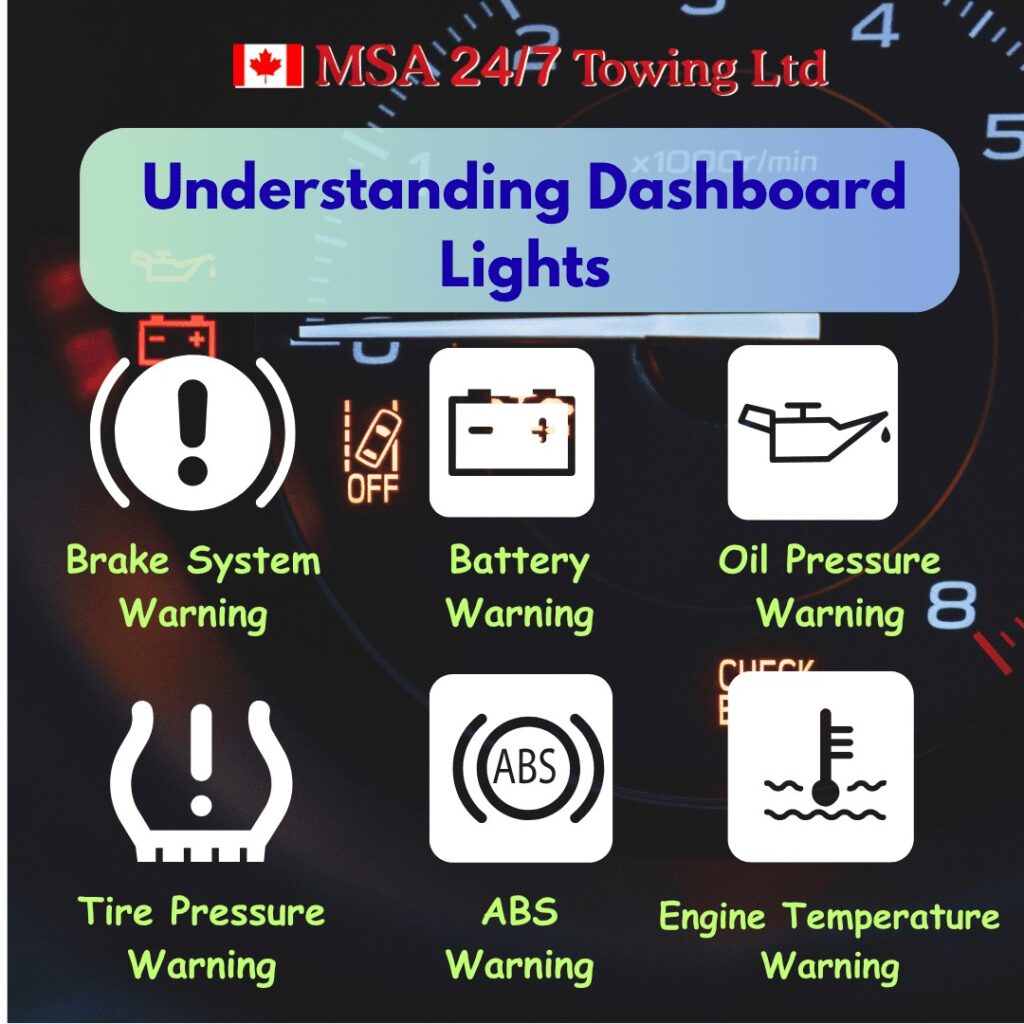
1. Oil Pressure Warning Light

What it looks like: A red oil can icon, sometimes with a drip, or it may simply say “OIL.”

What it means: This light signals your engine is losing oil pressure. Since oil lubricates your engine’s moving parts, low pressure can quickly cause severe damage.

Why it’s critical: Driving without proper oil pressure can result in permanent engine damage within minutes.

What to do: If this red oil can- symbol lights up, pull over safely, turn off your engine immediately, and contact an emergency towing service provider. Quick professional help can prevent costly repairs.

2. Engine Temperature Warning Light

What it looks like: A red thermometer icon submerged in liquid, or sometimes “TEMP.”

What it means: Your engine is overheating, which can happen due to low coolant, radiator issues, or other mechanical problems.

Why it’s critical: Continuing to drive risks damaging engine parts or causing total engine failure.

What to do: Stop driving, let the engine cool (do not open the radiator cap), and call for a tow to transport your vehicle safely.

3. Brake System Warning Light

What it looks like: A red circle with an exclamation mark inside, or the word “BRAKE.”

What it means: There’s an issue with your braking system, such as low brake fluid, worn pads, or system failure.

Why it’s critical: Faulty brakes greatly increase the risk of accidents.

What to do: If this light appears and you notice changes in braking, pull over safely and call for trusted towing service.

4. Battery/Charging System Warning Light

What it looks like: A red battery symbol or the letters “ALT” indicating alternator issues.

What it means: Your car’s battery isn’t charging properly, possibly due to alternator or battery failure.

Why it’s critical: Electrical failure can leave you stranded without warning.

What to do: Don’t wait until your car stalls. Contact a reliable Abbotsford towing company immediately when this light appears.

5. Multiple Red Lights or Additional Symptoms

If you notice several red warning lights at once, or if you hear unusual noises, smell something burning, or see smoke, treat the situation as urgent. Safely stop your vehicle and call for professional assistance without delay.

Yellow/Orange Lights: Warnings to Watch, But Not Always Immediate Emergencies

While red dashboard lights mean stop immediately, yellow or orange lights are more like your car’s way of saying, “Heads up, something needs attention soon.”

These warning lights signal possible issues that may become serious if ignored, but don’t always require pulling over right away. However, depending on how the light behaves and what you notice, you might still need to call for a towing service in Abbotsford or schedule roadside assistance before the problem becomes a serious matter.

Let’s look at some common yellow/orange warning lights and what they mean for you and your vehicle:

1. Check Engine Light

What it looks like: A yellow or orange outline of an engine, often labeled “CHECK ENGINE.”

What it means: Your vehicle’s computer has detected a problem, ranging from minor issues like a loose gas cap to more serious engine or emission system troubles.

The key distinction:

  • Solid light: Usually means you can safely drive to a mechanic for inspection.
  • Flashing light: Signals a more severe problem that could damage your engine quickly.

What to do: If it’s flashing, pull over when safe and call for emergency towing. If solid, you can schedule a tow to your preferred mechanic or dealership to have it checked.

2. Tire Pressure Warning Light

What it looks like: An exclamation mark inside a horseshoe-shaped icon representing a flat tire.

What it means: One or more tires have low air pressure.

Why it matters: Driving with low tire pressure can affect handling, fuel efficiency, and cause premature tire wear.

What to do: Pull over and check your tires. If you can safely inflate the tire, you might be able to drive to a tire shop. If not, or if you are unsure, calling for roadside assistance is the safest option.

3. Low Fuel Warning Light

What it looks like: A yellow gas pump icon.

What it means: Your fuel level is low and you should refuel soon.

What to do: Not an emergency, but don’t ignore it for long; running out of gas can leave you stranded and needing a tow.

4. Traction Control / ABS Warning Light

What it looks like:

  • Traction Control: A yellow icon of a car with wavy skid marks underneath it.
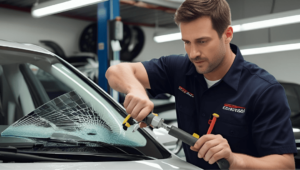
  • ABS: The yellow letters “ABS” inside a circle.

What it means:

  • These lights are connected to your vehicle’s safety systems. The traction control system helps you stay stable on slippery or uneven roads, while the anti-lock braking system (ABS) helps prevent your wheels from locking up during sudden braking.
  • When either light comes on, it usually means the system has been switched off or there’s a malfunction.

What to do:

  • If you’re driving in dry, normal conditions, you can usually continue with caution, just be extra aware that your car may not respond as safely in sudden stops or poor weather.
  • But if you’re noticing issues with braking, reduced traction, or strange handling, especially on hills or winding roads.
  • It’s best to pull over safely and call for roadside assistance in Abbotsford. Your safety should always come first, and we’re here to help if you’re unsure.

Beyond the Tow: What to Do After a Dashboard Warning Light Appears

Whether it’s a sudden red warning or a persistent yellow light, knowing what to do after the alert appears is just as important as recognizing it in the first place.

So, you’ve seen the light. Now what?

Here’s a simple step-by-step approach to help you stay safe, avoid stress, and get your vehicle where it needs to go, whether that’s your home, your trusted mechanic, or the dealership.

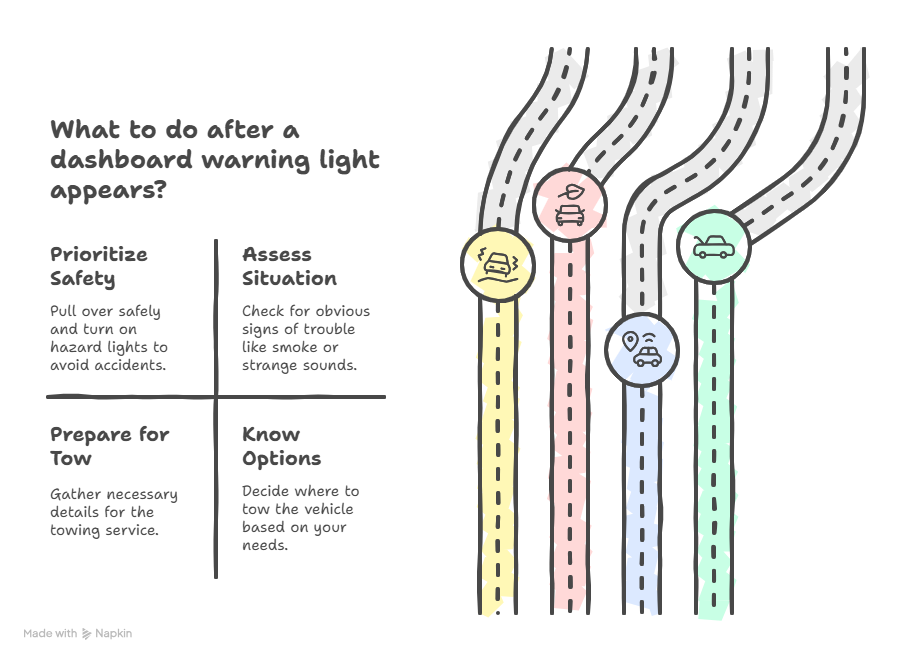
1. Prioritize Your Safety

If you’re driving when a warning light comes on, especially a red one- don’t panic, but don’t ignore it either. Your priority is to pull over safely.

  • Choose a visible, secure spot away from traffic if possible (shoulder of the road, parking lot, or a side street).
  • Turn on your hazard lights so others can see you clearly.
  • Stay inside your vehicle if it’s not safe to exit, especially on busy roads.

2. Assess the Situation

Take a breath and check for any obvious signs of trouble:

  • Is there smoke coming from under the hood?
  • Do you hear any strange sounds?
  • Are there multiple lights flashing at once?

If anything feels off or unsafe, it’s best not to drive the vehicle any further. That’s where calling a professional towing service in Abbotsford makes all the difference.

3. Prepare for the Tow

Before you call, gather a few key details. This helps our dispatch team send the right truck with the right equipment:

  • Your exact location (check your GPS or use a nearby business as a landmark)
  • Vehicle make, model, and colour
  • The nature of the issue (e.g., “Engine overheating” or “Check engine light flashing”)
  • Where do you want the vehicle to go (home, mechanic, dealership)

Once we have this, we’ll take it from there, quickly and professionally.

4. Know Your Options

One of the biggest advantages of calling a roadside assistance service provider is flexibility. You don’t have to figure everything out on the spot.

We can:

  • Tow your vehicle to your home if you’d rather arrange repairs later
  • Take it directly to your regular mechanic or auto shop
  • Drop it at a local dealership if your vehicle is under warranty

You stay in control, and the service provider just helps make the process smoother and safer.

Conclusion

Dashboard lights aren’t just annoying, they’re your vehicle’s way of letting you know something’s off. Some warnings are harmless if handled in time, but others can signal serious trouble that calls for quick action.

That’s why having access to a reliable towing service in Abbotsford matters. Whether it’s an overheating engine, a flashing check engine light, or brake system trouble, knowing when to pull over and call for help can save you from bigger problems down the road.

The next time a warning light pops up and you’re not sure what to do, don’t stress. Help is just a call away. Reach out to MSA 24/7 Towing Ltd. at 604-870-8697, and we will be there for your assistance whenever you want.

FAQs

Q1. Can I drive short distances with a warning light on if the car feels fine?
A: It’s tempting, especially if everything seems normal, but warning lights are triggered for a reason. Even if your car feels okay, driving with certain alerts (especially red ones) can make things worse. When in doubt, it’s safer to stop and call for help.

Q2. Will roadside assistance always tow me, or can they fix the problem on the spot?
A: Not every issue means a tow. In many cases, like low tire pressure or a dead battery, roadside assistance can get you moving again without a full tow. But if there’s a serious issue or safety risk, towing is the better option.

Q3. What should I do while waiting for a tow truck in Abbotsford?
A: Stay visible and safe. Turn on your hazard lights, stay inside your vehicle (if it’s safe to do so), and have your location info ready. If you’re on a quiet road or unfamiliar area, it’s okay to call a friend or let someone know where you are.

Roadside Assistance in Abbotsford: Help on the Spot or Time for a Tow?

Imagine this: you are driving on a rainy afternoon. The day’s been long, and suddenly, your car sputters, the dashboard lights flicker, and you see the smoke coming out. And you are left wondering, “What should you do now?”

For many drivers in Abbotsford, this exact scenario is more than familiar. And in that moment of stress, most people do the same thing- and that is, grab the phone and start Googling tow trucks.

But here’s where it gets interesting: not every vehicle issue calls for a tow. That’s where roadside assistance in Abbotsford can truly save the day.

Common Misconception: Many think roadside assistance means getting towed. The truth is, it’s often about getting help so you don’t need a tow.

However, there’s more to this than just calling for help. There are important details, things most drivers overlook, that can dramatically change how quickly (and safely) you get back on the road.

In this blog, let me break it all down so that you are prepared for such a situation next time.

Demystified Roadside Assistance in Abbotsford: What It Actually Covers (and What It Doesn’t)

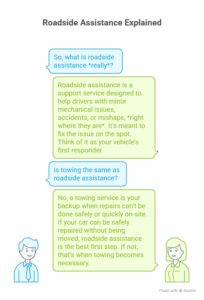
So, what is roadside assistance really?

To put it simply, roadside assistance is a support service designed to help drivers with minor mechanical issues, accidents, or mishaps, right where they are. Whether you’re stuck in a grocery store parking lot or on a back road in Bradner, it’s meant to fix the issue on the spot.

Think of it as your vehicle’s first responder.

Like many people do, don’t confuse towing with roadside assistance – they’re different types of help.

A towing service is your backup when repairs can’t be done safely or quickly on-site.

Key Consideration: If your car can be safely repaired without being moved, roadside assistance is the best first step. If not, that’s when towing becomes necessary.

Why it Matters:

  • It saves you time and hassle.
  • It’s usually faster than arranging a tow.
  • It keeps minor issues from becoming major inconveniences.
  • It’s often more cost-effective than full recovery.

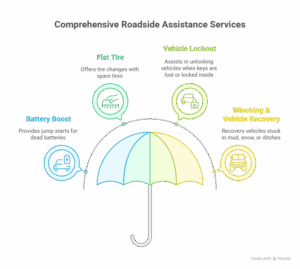
Breakdown Services: The On-the-Spot Fix

Now that you know its meaning and how it is different from towing, let’s talk about some common services that fall under the service:

1. Battery Boost (Jump Start)

If your car won’t start, be it a cold Abbotsford morning or a scorching summer afternoon, a dead battery is often to blame. Maybe you hear a few clicks. Maybe there’s just silence. Either way, you’re not going anywhere without a jump start.

That’s where roadside assistance steps in. A trained technician will come to your location and give your battery the proper boost it needs to get the engine running – no asking strangers for help in a parking lot or roadside.

Important Tip:

Summer heat can be just as tough on batteries as winter cold. High temperatures speed up battery fluid evaporation and can weaken internal components, so don’t be surprised if your car won’t start even in the middle of July.

Quick FAQ – Can I drive after a boost?

Yes, but don’t shut the engine off right away. Drive straight to your mechanic or home to let the battery recharge and consider having it tested, especially if this isn’t the first time it’s let you down.

2. Flat Tire

A sudden flat tire is never welcome, as it puts a serious damper on your plans. Maybe you hear that dreaded “thump-thump” or feel your steering go off while driving, and now you’re stuck in the middle of the road.

In this service, expert professionals come to your exact location and swap the flat tire with your spare, meaning no sweating out under the hot sun trying to wrestle your jack and lug wrench.

Important Tip: Summer heat can soften tires and increase the chance of blowouts, especially on long trips. Before you hit the road, check your spare tire; many drivers forget it’s underinflated or even missing. Having a good spare ready is a real lifesaver. You can avoid being stranded by maintaining your vehicle regularly and timely.

Quick FAQ – What if I don’t have a spare?

No worries. If you’re without a usable spare, the service provider can arrange a safe tow to the nearest tire shop or your preferred location, so that you are not stranded for too long.

3. Vehicle Lockout

Locked out of your vehicle? It happens more often than you think – keys left inside or the door locked accidentally, while you are outside.

That’s when roadside assistance in Abbotsford can help you. A trained technician is sent to your location to safely unlock your vehicle. You don’t have to worry about broken windows, damage, or the need to stress in the heat.

Important Tip: If your car has an aftermarket alarm system or extra security features, let the company know when you call. It helps the professionals to bring the right tools and avoid delays.

Quick FAQ – Will unlocking my car set off the alarm?

Sometimes, yes. But don’t worry, the technician will help you reset it, so you’re not stuck with a blaring siren in a busy parking lot.

4. Winching & Vehicle Recovery

If your vehicle gets stuck in mud, snow, or a ditch, roadside support can safely pull you out using specialized winching equipment.

How Roadside Assistance Helps

The trained team uses the right tools to recover your vehicle without causing damage, getting you back on the road quickly.

Important Tip: Avoid trying to rock your vehicle free if you’re stuck deep; it can cause more damage. Wait for professional help.

Quick FAQ – What kinds of terrain can you recover from?

Most service providers can recover from mud, snow, soft shoulders, and shallow ditches- if it’s safe to do so.

When Roadside Assistance Isn’t Enough: Knowing When a Tow Is the Smart Move

Sometimes, your vehicle’s issue is bigger than a roadside fix.

Here’s when a tow becomes necessary:

  • Engine or transmission failure
  • Accident damage that makes the vehicle unsafe to drive
  • No spare tire available or multiple flat tires
  • Overheating or major warning lights that suggest a serious issue
  • Failed jump start (battery or alternator may be dead)

Key Consideration: Don’t stress about diagnosing the issue yourself. When you call the right service provider, the expert team will assess the problem and either fix it on-site or arrange a tow, seamlessly.

Why This Matters:

You won’t have to make a second call or explain your situation twice. Whether it’s a quick fix or a tow, everything gets handled smoothly through one reliable local service.

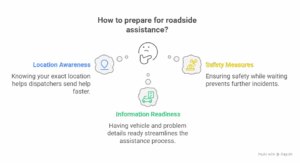
What Every Abbotsford Driver Should Know Before Calling Roadside Assistance

Being stranded is stressful enough, and if you are unprepared, it makes the situation even worse. So here are some simple but often overlooked tips to help you stay safe and get help faster when you need roadside assistance in Abbotsford.

  1. Know Exactly Where You Are

One of the trickiest parts when you are suddenly stuck in the middle of nowhere is explaining your location. To avoid misunderstanding:

  • Try to spot nearby landmarks, highway exits, or cross streets. If you’re using a GPS app, it often shows your exact coordinates.
  • Take a quick screenshot or note them down to share with the dispatcher. This little step can save valuable time.
  • Try to spot nearby landmarks, highway exits, or cross streets. If you’re using a GPS app, it often shows your exact coordinates.
  • Take a quick screenshot or note them down to share with the dispatcher. This little step can save valuable time.
  1. Stay Safe While You Wait
  • Once you place your call for help, safety is the priority. Turn on your hazard lights immediately so that other drivers can see you.
  • If it is safe, get out of the vehicle and away from traffic. And if you have reflective triangles or a safety vest, use them, especially if it’s dark or visibility is low. Anything that ensures you are seen is always important.
  1. What to Have Ready Before You Call

When you’re ready to call roadside assistance in Abbotsford, having a few details on hand can make the process smoother:

  • Your vehicle’s make, model, and color
  • A clear description of the problem (like “flat rear tire” or “dead battery”)
  • Any dashboard warning lights or unusual sounds
  • Whether you’re parked in a safe spot or need assistance getting to one

Quick Question: How Soon Will Help Arrive?

Response time can vary based on traffic, weather conditions, and where you are. To ensure a prompt response, be clear and precise while giving your information to the dispatcher. Doing so will assist in giving you priority.

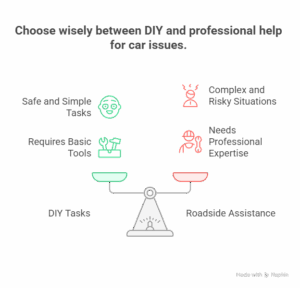
DIY or Call for Help? Knowing the Difference Can Save You Time and Stress

It’s easy to think, “I’ll just handle it myself” when car trouble hits, but not every roadside issue is a quick fix. Some situations can be tackled with a bit of prep and patience. Others? You’re better off calling someone who has the knowledge and the right tools. Here’s how to tell the difference.

Situations Where DIY Might Work (If You’re Prepared)

  • Jump-Starting Your Battery: If you’ve got jumper cables, a second vehicle, and you feel confident using them safely, this one’s possible. Just be cautious; wrong connections can do more harm than good.
  • Changing a Flat Tire: Only do this if you’re parked on flat ground, you have all the right tools, and traffic isn’t zipping by a foot from your bumper.
  • Quick Checks: Loose battery cable? Gas cap not tightened? Such little fixes can sometimes make a big difference, just don’t go digging around under the hood if you’re unsure what you’re looking at.

When It’s Better to Call for Help

  • You’re in a risky spot: Highway shoulders, busy intersections, poor lighting- if it doesn’t feel safe, it probably isn’t. Stay inside, stay visible, and call for assistance.
  • A jump didn’t solve it: If the car still won’t start, the issue could be deeper, such as a fault in the alternator or starter, not just the battery.
  • You’re locked out: Modern car locks can be tricky (and damaging if you use the wrong tool). Let a professional with proper training handle it.
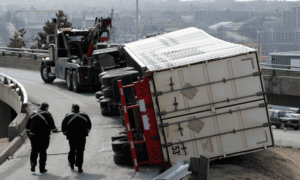
  • No usable spare: A flat tire is manageable, unless your spare is flat too, ditches, or you’ve got more than one tire down.
  • You’re stuck in mud or snow: Winching a vehicle safely requires the right equipment and know-how. Spinning your wheels usually makes things worse.

Remember: It’s okay to try a fix if it’s something simple and safe, but don’t risk injury or damage just to save a few minutes.

When in doubt, roadside assistance in Abbotsford is just a call away. Local pros know the area, get to you faster, and have the tools (and training) to get you back on the road without the guesswork.

Conclusion

Roadside emergencies happen. But with the right knowledge, you don’t have to panic. Knowing the difference between roadside assistance and towing in Abbotsford, understanding what to expect, and preparing in advance can turn a stressful moment into just a minor delay.

And the best part? You don’t have to figure it all out alone. We’re right here when you need us.

Need Help? Or Just Want to Be Prepared?

Call MSA 24/7 Towing Ltd. for assistance at 604-870-8697

Frequently Asked Questions

Q1. Is roadside assistance available 24/7 in Abbotsford?

A: Yes, most local providers operate around the clock. Whether it’s a late-night lockout or an early morning battery issue, help is typically just a call away.

Q2. What if I don’t know what’s wrong with my car?

A: You don’t need to diagnose it yourself. Just describe what’s happening, like “it won’t start” or “smoke from under the hood”- and the tech will take it from there. If it can’t be fixed on-site, they’ll recommend a tow.

Q3. Does roadside assistance cover motorcycles or trucks?

A: It depends on the provider. Some offer service for motorcycles, small RVs, or light-duty trucks, while others may be car-specific. Always mention your vehicle type when calling.

Q4. Will using roadside assistance affect my insurance?

A: Generally, no. Calling for help doesn’t count as an accident claim, but it’s always a good idea to check with your insurer if you’re using a coverage-based service.

Q5. What’s the difference between roadside assistance and towing?

A: Roadside assistance tries to fix the issue on the spot, like a jump start, a tire change, or fuel delivery. Towing comes in when the problem is more serious or can’t be safely fixed at the scene.

Q6. Can I choose where my vehicle gets towed if it comes to that?

A: Yes, but within reason. Most services will tow to a shop of your choice within a set radius. Beyond that, additional mileage fees might apply.

Avoid Breakdowns & Legal Issues with Trusted Towing Service

How a Local Towing Service in Mission Actually Help You?

Summer is a great time to explore, relax, and enjoy the open road. Whether you’re heading to the lake, the mountains, or just visiting family, road trips are a great way to enjoy the season. 

But as fun as summer driving can be, it also comes with a few common problems. Especially if your car isn’t ready for the heat. That’s where trusted towing service in Mission can be a real lifesaver.

From unforeseen breakdowns to understanding towing regulations, having a dependable towing squad by your side can change everything. In this blog, we will talk about how local towing companies can help you avoid the stress of summer breakdowns and legal issues.

Summer Driving Troubles: What Can Go Wrong?

We all love a smooth road trip, but summer weather and long drives can put a lot of pressure on your vehicle. Here are a few things that often go wrong during summer:

1. Overheating Engines

Summer heat can put a lot of pressure on your engine. If your car isn’t well, maintained, the engine might overheat and leave you stranded on the side of the road.

2. Flat or Blown Tires

Hot asphalt and low-pressure tires create a poor combination. Many drivers find themselves with flat tires or even blowouts during the summer months. It’s not only a bother, but it might also be unsafe.

3. Dead Batteries

We usually think of batteries failing in winter, but heat can do just as much damage. A weak battery may not handle long trips or the extra work your car does in hot weather.

5. Running Out of Fuel

Believe it or not, this occurs more frequently than you might expect. Long stretches of highway and not enough gas stations can catch drivers off guard.

If any of these things happen to you, don’t panic. Trusted towing service in mission are just a phone call away.

Don’t Let a Breakdown Turn into a Scam: A Real Lesson from the Road

Accidents are always traumatizing and are often more so when they occur suddenly and in bad weather. One driver learned this after spinning out on the highway during a rainstorm. Two tow trucks were there in a matter of minutes, they told the driver they worked for the highway and they would take care of everything. The stressed driver handed over the keys.

The tow trucks towed the car to a nearby gas station, but when the driver tried to take the car to a shop the gas station was closed. After the driver called his insurance, they told to take the car home and wait for the tow truck. The tow truck that showed up added a new “waiting” fee of $200, which seemed unfair.

The good news was that the insurance provider instructed the driver not to pay and approved the towing of the car.

What can we learn from this?

  • Stay cautious and ask questions after an accident, even if the situation has you shaken.
  • Not every tow truck operator is honest. Some are looking to take advantage of you with false representations or too high fees.
  • You should always verify with your insurance provider before you allow any tow trucks to take your vehicle.
  • And remember, just because someone shows up quickly does not mean they are officially dispatched, or trustworthy.

Legal issues frequently occur during a scenario like this. Being informed when inquiring about towing service in mission can help you avoid being scammed and challenge unfair practice. It helps to make your experience a better, and clearer process.

Why Local Towing Service in Mission Matter?

Being stuck on the side of the road due to a break down, a flat tire or an accident is bad enough. You don’t want to get confused and shocked by the charges. this is where local towing services can assist. Here are some advantages to local towing companies:

1. Faster Response Times

They will be faster because they do not have to come from far away. When you choose a local towing company, they are just around the corner. They are not coming from miles away. 

For you this means you do not have to wait and you can get going sooner. When you are in a stressful situation, time matters. It makes a difference to have someone locally who can help you.

2. Personalized Service

Using a local towing service provides you more than a quick fix. It connects you to someone who cares about you and your needs. Unlike large companies, local businesses take the time to understand your situation. They offer solutions that are right for you. 

Local companies have your experience as a priority. The personalized response improves your delivery and minimizes the stress that you are feeling.

3. Support for the Community

By choosing a local towing service, you are backing your community. The money you pay for a local towing service stays local, helping small businesses grow even bigger.

Local businesses create jobs, and relationships which means you get better service and the community gets better. Choosing local towing service in Mission is choosing to help your neighbors.

4. Better Local Knowledge

Local towing services have a deeper knowledge of the surrounding area. They know the fastest routes, where to find the closest reliable auto shops, and what specific challenges that might be in the way. Whether it’s the quickest route to a repair shop or a local contact for help, local companies bring valuable insight.

Towing Laws and Regulations in Mission: What You Need to Know

Getting towed is never fun, but it’s even worse when it comes with surprise fees or legal problems. To avoid that, it’s good to know the local rules.

1. Watch Where You Park

Do not park in front of driveways, fire lanes, or “No Parking” zones. Also avoid private property without permission. Towing companies may tow your vehicle if you park in an unauthorized location. The City of Mission’s Parking Violations Towing Policy outlines these regulations in detail .

2. Know Private Property Rules

Some businesses or apartments have signs warning about unauthorized parking. If your car is in one of these spots and you’re not a customer or resident.

3. Signs Must Be Posted

The towing company must post a sign nearby when they tow your vehicle from private property. This will help the vehicle owner to identify the name and telephone number of the towing company. This helps to track down the vehicle quickly.

4. Ask for a Breakdown of Fees

You have the right to know how much the towing will cost before you pay. A towing company should give you a clear breakdown of charges. This should include hook-up, mileage, and storage charges to be transparent with you and to avoid surprise fees from towing service in Mission.

5. Choose Your Towing Company

If you break down and call for help yourself, you can choose the towing company you want. You can call whoever you trust or whoever is on their way to help you; you are not forced to use the first one that arrives.

Understanding these rules will keep you out of trouble with a tow. It will hopefully give you some peace of mind if you do run into trouble on the road.

What to Look for in a Trusted Towing Service in Mission

Not all towing services are the same. Here are things to consider when choosing a towing service that you can trust:

1. Licensed and Insured

Make sure the towing company that your choosing is licensed and insured. This protects you, and your vehicle.

2. Good Reviews

Do a quick online search for reviews or ask your family and friends who they trust. A towing company with positive feedback is more likely to offer an excellent service experience.

3. 24/7 Availability

Breakdowns do not follow a schedule. Find a company that offers best towing service 24/7.

4. Clear Pricing

A reputable towing company should make their fees clear. Look for flat rates, or a reputable quote. Avoid companies that hide fees, or will charge you something extra without notifying you.

5. Friendly and Helpful Staff

If the person you talk to on the phone sounds rude or unhelpful, that is a bad sign.

Look for a team that provide reliable towing service in Mission and who are polite, professional, and patient.

Final Thoughts

Summer should be fun, not full of stress from car troubles. Whether you’re going on a trip or just driving around town, it’s always good to be ready for anything. A trusted towing service in Mission can help you when things go wrong, like a flat tire, dead battery, or a breakdown.

Knowing your rights and finding a good, honest towing service provider can help avoid extra charges. You will feel like you are in control of the situation. A good towing company will get you back on the road quickly and safely, so you can enjoy your summer free of mind.

Frequently Asked Questions (FAQ)

  1. Why might I need towing in summer?
    Hot weather can cause engine overheating, flat tires, or dead batteries.
  2. How do I know if a towing company is trustworthy?
    Check for license, insurance, good reviews, clear pricing, and 24/7 service.
  3. Can I choose my own towing company?
    Yes, you’re allowed to pick the company you trust, unless directed by authorities.
  4. What should I do if I break down?
    Pull over safely, turn on hazard lights, and call your trusted towing service or insurance.
  5. What fees should I expect?
    You should get a clear breakdown of hook-up, mileage, and storage costs.
  6. How can I avoid towing scams?
    Ask for ID, confirm with your insurer, and don’t hand over keys to unknown operators.
  7. Why choose a local towing service?
    Faster response, better local knowledge, personalized care, and support for the community.
  8. Can towing companies help with more than towing?
    Yes. They also assist with flat tires, lockouts, jump starts, and fuel delivery.

Complete Guide for a Hassle-Free Battery Boost

Jumpstart in Abbotsford: Don’t Let a Dead Battery Ruin Your Day

Ever been there? You’re running out the door, prepared to face the day, clutching the key… and nothing. Only that horrible click, click, click. Your stomach drops. You’re stuck! We’ve all been there, haven’t we? it’s frustrating, especially on those hot summer days.

Well, if you’re stuck in that maddening situation right here in the town, you’re probably thinking about a jumpstart. It’s an instant solution, an emergency band-aid for your battery. But before you reach for those jumper cables, let’s dive into everything that you must know regarding jumpstart in Abbotsford.

What is Jumpstart?

A jumpstart is pretty simple. You are using the power from another car’s battery (the donor vehicle) to give your dead battery enough juice to crank the engine. Think of it like a friend giving you a little push to get your bike going.

You’ll need a set of jumper cables, those thick, insulated wires with clamps on each end. Make sure they’re in good condition, without any cracks or exposed wire.

Here’s how to jumpstart your car in simple steps:

  1. Position the Cars: Park the functioning vehicle close to yours facing it, but not touching it. Make sure you apply the parking brakes on both vehicles.
  2. Pop the Hoods: Open each hood and find the batteries, you will want to be able to have easy access to the terminals.
  3. Identify the Terminals: Each battery has two terminals on it, one with a positive symbol (+) and the other with a negative symbol (-)
  4. Connect the Positive:
    • Take the red cable and clip one end onto the positive (+) terminal of the dead battery.
    • Clip the other end of the red cable onto the positive (+) terminal of the good battery.
  5. Connect the Negative (carefully):
    • Now, take the black cable and clip one end onto the negative (-) terminal of the good battery.
    • The other black clip goes on an unpainted metal part of your car’s engine block. This grounds the connection and keeps you safe from sparks near the battery.
  6. Start the Donor Car: Turn on the working car and let it run for a few minutes. This gives the dead battery a little time to get some charge.
  7. Try Starting Your Car: Now it’s time to see if your car will start. If it does, awesome! Let it run for a little while to help recharge the battery.
  8. Disconnect the Cables (in Reverse Order):
  • Remove the black cable from the engine block of your vehicle.
  • Remove the black cable from the negative terminal of the donor vehicle.
  • Remove the red cable from the positive terminal of the donor vehicle.
  • Lastly, remove the red cable from the positive terminal of your vehicle.

And just like that, your car should be running again! A quick jumpstart in Abbotsford can get you back on the road fast.

A Little Help Goes a Long Way

Let me tell you about an unexpected event that changed a frustrating moment into something unforgettable.

On the evening of Friday, July 21, a couple was driving home from babysitting in Tsawwassen when their car battery died on 32nd Avenue. With limited options and heavy traffic, they were unsure how to get help. Just as the couple was trying to decide their next move, a Chevy Silverado pickup truck towing a boat pulled in behind them. Without hesitation, the driver of the Silverado got out from his truck, pulled out a portable battery booster and gave them a quick boost.

The couple was very grateful, but didn’t have the opportunity to properly thank the stranger. His selfless kind act was a refreshing example of kindness that is still alive in the world. Though they may never know his identity, they will always remember his selflessness and share the story as a reminder that people are still willing to help without expecting anything in return.

To that stranger with the Chevy Silverado, thank you for your kindness to this couple who will always remember your act of kindness.

How to Stay Safe During a Jumpstart in Abbotsford?

Safety is critical when working with car batteries and electricity. Here are some important reminders:

  • Wear eye protection. Battery acid is harmful, and there is always a slight risk of sparks.
  • Don’t smoke or use flame. A fault in the battery may cause flammable hydrogen gas to be released.
  • Make sure the cars are not touching so there is no danger of an electrical connection being made.
  • Connect the cables in the right order. Following the steps properly will eliminate the risk of a short circuit, reducing the risk of damage to your vehicle.
  • Don’t ever try to jump a frozen battery. It can explode.
  • If you don’t know what to do, ask for help. If you feel at a loss with the jumpstarting, it is acceptable to ring a roadside assistance service or a tow truck. Better to be safe than sorry!

Who to Call When a Jumpstart Fails?

Sometimes no matter how hard you try, a jump will not work out. And to do that, knowing who to call for jumpstart in Abbotsford is very important. Here are a few options:

  • Local Towing Companies: British Columbia has several reputable towing companies that offer emergency jumpstart services. A quick online search for “towing Abbotsford” will provide you with a list of local options. Keep a few local towing company numbers in your phone for emergencies.
  • Mobile Mechanics: In some cases, a mobile mechanic might be able to come to your location and diagnose the battery issue or provide a jumpstart.

The Legal Side of a Jumpstart on the Road

Jumpstarting a car on the side of the road is usually seen as a helpful and necessary thing to do when a vehicle breaks down. But in British Columbia, it’s still good to know the basic rules and laws that apply when your car stops working on the road.

1. Stopping, Parking, and Leaving Vehicles (Section 183)

The Motor Vehicle Act of British Columbia outlines specific rules for stopping and parking vehicles on public roads. If your car breaks down and you need to stop to jumpstart it, you have the legal right to do so. However, you must ensure that your vehicle doesn’t block traffic or create a safety hazard for other drivers during a jumpstart in Abbotsford. Once your car is running, move it to a safer location if necessary.

2. Hazard Lights (Section 190)

When your car is stopped on the side of the road and you’re attempting to jumpstart it, Section 190 of the Motor Vehicle Act requires you to turn on your hazard lights. This warns other drivers that your vehicle is stationary and could be a potential hazard, especially in low-visibility conditions like rain or fog.

Warning Devices (Section 191)

If you’re in a particularly busy area or a location with poor visibility, Section 191 encourages using additional warning devices, such as reflective triangles or flares. Though these may not always be necessary during a quick jumpstart, they are a smart safety measure, especially on highways or busy roads.

Vehicle Maintenance and Responsibility

The Motor Vehicle Act also addresses the responsibility of vehicle owners to maintain their vehicles in a safe condition to operate. If your battery is dying repeatedly, it may be a reflection poor maintenance. If this happens repeatedly, it’s a wise thing to get it checked by a mechanic.

Tips for Preventing Battery Issues in the First Place

Knowing how to jumpstart in Abbotsford is great, however, it is better if you don’t have to. Here are some easy tips to make sure you stay on top of your battery care:

  • Routine Maintenance: Have your battery checked out by a mechanic when you can. A mechanic will be able to test and review the charge capacity of the battery and inform you of the overall battery health.

  • Terminal Cleanliness: Battery corrosion (a white, chalky substance) on your battery terminals can also disrupt the flow of electricity. If the terminals are dirty, you should routinely clean them with a wire brush and a baking soda and water mixture. Once cleaned, you can put on a spray that protects against corrosion.
  • Tighten Connections: When you’re checking your terminals, you should also inspect that your battery cables are properly tightened to the terminals. Loose connections can lead to power issues and can even cause battery failure.
  • Battery Tender: If you don’t drive your car frequently, a battery tender (also known as a trickle charger) can help maintain the battery’s charge and prolong its life.
  • Temperature: The extreme hot and cold can impact your vehicle’s battery. If your vehicle’s battery suffers an issue in the summer months, do remember that it is quite common to run into battery problems in the hottest part of the summer, so needing a jumpstart in Abbotsford on a hot day may not be a curse!

  Things You Need to Jumpstart your Car

  • Jumper cables (in good condition)
  • Flashlight or headlamp
  • Gloves and eye protection
  • Emergency contact numbers (towing companies, insurance, etc.)
  • Reflective triangle or warning flares
  • Basic knowledge of jumpstart steps

Conclusion

Jumpstarting a car is a common occurrence, and knowing how to do it safely and being aware of the basic regulations for jumpstart in Abbotsford can save you and others a lot of trouble. Keep a good set of jumper cables in your car, know the proper procedure, and always prioritize safety.

Also, you should always have your battery checked and serviced to prevent unexpected failure. Be familiar with where you can stop and how to stop safely in the event of an emergency. Don’t hesitate to use your hazard lights and warnings when need be. And remember, if you’re ever in doubt or feel unsafe, call a pro for help. Be sure to check online reviews and ratings to find a reliable service.

Windscreen Issues: How to Protect Your Vehicle and Yourself

Windshield Repair: Drive Safely, From Tow to Fix

Has this happened to you? You are driving down the road on a nice sunny day, when suddenly a rock and debris lands on your windscreen. Or, a tiny crack you had just gets worse.

Whether it’s a tiny chip or a large crack, any sort of glass damage can change your nice drive into a stressful situation. That’s when it’s really important to know what to do next. Like, getting your car off the road safely, getting it towed, and finding the right place for windshield repair.

Here’s a simple guide to help you stay calm and get your car back on track.

Why Windshield Damage Shouldn’t Be Ignored: The Safety Risks You Need to Know

Your windshield is more than just a piece of glass. It has an important function in keeping you safer on the road. Here’s how:

  • It affects visibility: A small crack in a glass can block your view and make it more difficult to operate a vehicle safely.
  • It might affect airbag deployment: A cracked view glass can affect how your airbags deploy when you crash your vehicle.
  • It’s against the law in some places: Driving when visibility has been impaired is often illegal in some states, or at the very least dangerous, so you should get it fixed right away.

Quick tip: A small crack you see today could be a big problem tomorrow. Having your windshield repair done timely will prevent further damage and be more cost-effective.

What to Do When Your Windshield Gets Damaged

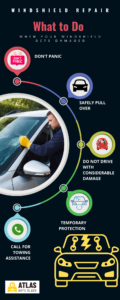
  • Safely pull over: As soon as you observe the damage, safely move your vehicle off the road to avoid the risk of any further issues or accidents.
  • Do not drive with considerable damage: The damage may worsen if you drive with a cracked or chipped auto glass, especially on rough roads.
  • Temporary protection in winter: If you’re in cold weather, securing the damaged windscreen with plastic or tape is crucial to prevent ice and snow from worsening the crack.
  • Call for towing assistance: Call for a tow service to transport your vehicle to an auto glass service. It is the best way to avoid further damage.

Pro Tip: Always have the contact details of a trusted towing service on hand, so you can act quickly when an emergency arises.

How to Choose the Right Auto Glass Service

Following the tow, selecting a reputable windshield repair shop is key to getting back on the road fast and safely:

  • Look for certified professionals: Make sure the repair shop is reputable and follows industry standards to guarantee high-quality repairs.
  • Consider the repair process: Inquire about their procedure for repairs; should they provide a clear answer to your questions that’s a great sign. But, If they simply say go for glass replacement without the reason, it may be wise to get a second opinion.
  • Verify your insurance coverage: Reach out to your insurance provider to determine if the glass repairs are covered under your existing coverage. Many insurance companies offer minor repair coverage at little to no cost.

Tip: Before you proceed to repair the auto glass, make sure to call your insurance company to see if it was a covered repair under your policy. Very often minor repairs could be handled at affordable to no cost.

What Does Windshield Repair Cost?

The repair costs can vary based on a few factors, such as the severity of the damage, the type of glass your vehicle uses, and your location. Here’s a general idea of what you can expect to pay:

Damage Type Estimated Cost Details
Small Chip or Crack $50 – $150 Most shops can repair minor chips using resin.
Medium Crack $150 – $250 Cracks between 3–6 inches might still be repairable.
Large Crack $250 – $400 Anything over 6 inches usually requires replacement.
Windshield Replacement $200 – $1,000+ Full replacement cost depends on the vehicle model.
Insurance Coverage $0 – $500 Many insurers cover repair costs, especially for small cracks.

 Beyond the Windshield: Other Glass Issues to Watch For

While the front glass of the vehicle might be your priority, don’t forget that other parts of your vehicle’s glass are also vulnerable to damage.

  • Side and rear windows: Extreme weather conditions or debris can cause damage to your side and rear windows, so be sure to check them regularly.
  • Choosing durable auto glass: Choose durable materials that can withstand temperature changes and other environmental factors.

Preventing Damage – Simple Tips to Keep Your Windscreen Safe

Here’s how you can minimize the risk of windshield damage and keep your car in great condition:

  • Keep your distance from trucks or other vehicles carrying loose debris. They can cause rocks or other objects to fly from their portable or temporary carriers sometimes, striking your car glass.
  • Check your wipers for wear and tear and replace them when necessary. Worn-out wipers would drag dirt across your windshield and can worsen possible chip and cracks your glass may have.
  • Drive cautiously on gravel roads or potholes. Either will put the auto glass at risk of being damaged. If you can, always drive slowly.
  • Keep an emergency kit in your car including plastic sheeting and tape if you need to secure a crack until you get a final fix.

Conclusion

Certainly, damage to the vehicle’s front glass is a pain! But don’t panic! If you know what to do and where to get help, you’ll be on the road again in no time.
The first thing to remember is to act quickly, whether it’s pulling over to a safe location, calling towing service, or taking your vehicle to a reliable shop for an inspection. Acting fast makes a difference.
Windshield repair doesn’t have to be a stressful experience. With professional help, you can restore your car’s safety, save money by fixing small cracks early, and prevent further damage from occurring.

Tow Trucks & Trouble: Dodging Danger on Aldergrove’s Roads

How to Avoid Tow Truck Accidents in Aldergrove?

Tow trucks are a huge help when your vehicle breaks down, as they get you out of a tight spot and back on the road. However, at the same time, they can be dangerous if people are not paying attention. Tow truck accidents can happen in a split second, whether you are passing by alone, walking nearby, or even if you are the person who called for help, it is important to be extra careful and know how to avoid accidents. Also, it is not that hard to stay safe near tow trucks. Let me break it down in a simple, easy-to-understand way so you can prevent yourself and others from getting hurt.

Why Are Tow Truck Accidents a Problem?

Since tow trucks are heavier and bigger than other cars, they are more difficult to stop and maneuver. Tow trucks, as a line of business where they help stuck vehicles, drive off to the side of the road, posing a risk to other passing drivers. At times, drivers fail to see them in time and run into them.

The good news is that staying aware, following a few simple driving habits, and checking online reviews can help you avoid these accidents.

Tips for Drivers: How to Stay Safe Around Tow Trucks

If you’re driving near a tow truck, here’s what you should do:

  1. Slow Down and Move Over

British Columbia’s Move Over Law says you to slow down and, if possible, change lanes when passing tow or emergency vehicles with flashing lights. This protects recovery vehicle operators from harm while working.

If you are driving on a highway and see a tow truck on the side of the road, change lanes if it is safe to do so. If not, slow down and pass carefully. Being careful in these situations can help prevent tow truck accidents and keep everyone on the road safe.

  1. Keep a Safe Distance

Tow trucks need extra space to load or unload vehicles. If you’re driving behind one, don’t tailgate. Stay at least three seconds behind so you have time to react if they stop suddenly.

  1. Watch for Sudden Stops

Tow trucks often have to stop unexpectedly to help stranded cars. Be ready for this and keep your eyes on the road.

  1. Be Extra Careful in Bad Weather

Rain, snow, or fog can make it harder to see a recovery vehicle stopped on the road. Reduce your speed and keep your headlights on so you can react quickly if needed.

  1. Avoid Distractions

Texting, changing the radio, or eating while driving can make you miss important road signs or flashing lights from a recovery vehicle. Stay focused to avoid accidents.

Tips for Pedestrians: How to Stay Safe Around Tow Trucks

If you’re walking near a tow truck, be careful:

  • Don’t Stand Too Close – If your vehicle is being towed, step back while the driver works. Stay on the sidewalk or in a safe location.
  • Watch for Traffic – Drivers might not expect to see people near a recovery vehicle, which can increase the risk of tow truck accidents. Look both ways before crossing into the road.
  • Be Visible at Night – If you are waiting for a tow in the dark, use your phone’s flashlight or wear something bright so other drivers can see you.

Tips for Calling a Tow Truck: How to Stay Safe While You Wait

If your vehicle breaks down and you need a tow truck, here’s how to stay safe while waiting:

  • Pull Over to a Safe Spot – If possible, move your vehicle to the side of the road or into a parking lot. Staying in the middle of traffic is dangerous.
  • Turn On Your Hazard Lights – This makes your vehicle more visible so other drivers know you’re in trouble.
  • Stay Inside Your Vehicle – If you’re on a busy road, it is safer to stay inside with your seatbelt on rather than standing outside.
  • Be Aware of Scams – Only call a trusted towing company in Aldergrove. Some scammers pose as recovery vehicle drivers and charge high fees, which can lead to risky situations and even tow truck accidents. Staying aware and choosing a reliable service helps keep you safe.

What Tow Truck Drivers Can Do to Prevent Accidents

Tow truck drivers also have a big responsibility in keeping the roads safe. Here are some things they can do:

  • Use Flashing Lights and Cones – Warning lights and cones help alert other drivers to slow down.
  • Wear Reflective Gear – Bright vests help recovery vehicle drivers stay visible, especially at night.
  • Park in the Safest Spot Possible – Sometimes, there is no best place to park, but choosing the safest option can prevent accidents.
  • Communicate with Stranded Drivers – Letting the owner of the vehicle know where they can stand safely will protect them from harm and confusion.

Conclusion

Tow trucks are an important part of keeping our roads running smoothly, but tow truck accidents can happen if drivers aren’t careful. If you are driving, walking, or waiting for help, these simple safety tips can protect you and others.

Next time you see a tow truck in Aldergrove, slow down, move over, and stay alert. A little care goes a long way in preventing accidents.