

You’re out driving through Abbotsford, maybe on South Fraser Way or heading toward Sumas Mountain on a warm afternoon, when a dashboard light suddenly flicks on.
And now you are wondering:
“Is this something serious? Should I pull over? Do I need a towing service in Abbotsford, or can I make it home?”
We’ve all been there, and the truth is, those little lights on your dash aren’t just there to annoy you. They’re your car’s way of saying, “Hey, something’s not right here.” But how do you know which lights are minor, and which ones are code red?
In this blog, I’ll break it down, what your dashboard lights are really trying to tell you, when to keep driving, and when it’s time to call for a tow or roadside assistance before things go from bad to worse.
Red Lights: The Warnings You Should Never Ignore
Dashboard lights are your vehicle’s way of communicating, and while some are simply alerts or maintenance reminders, red warning lights are in a category of their own.
When a red light appears on your dash, it usually signals a serious issue that requires immediate attention. Ignoring it, even for a short drive, can lead to costly damage or leave you unexpectedly stranded, whether you’re on a quiet residential road or in the middle of traffic.
Let’s start with understanding the red dashboard lights that should never be ignored, and when it’s best to stop driving and call for a towing service in Abbotsford right away.
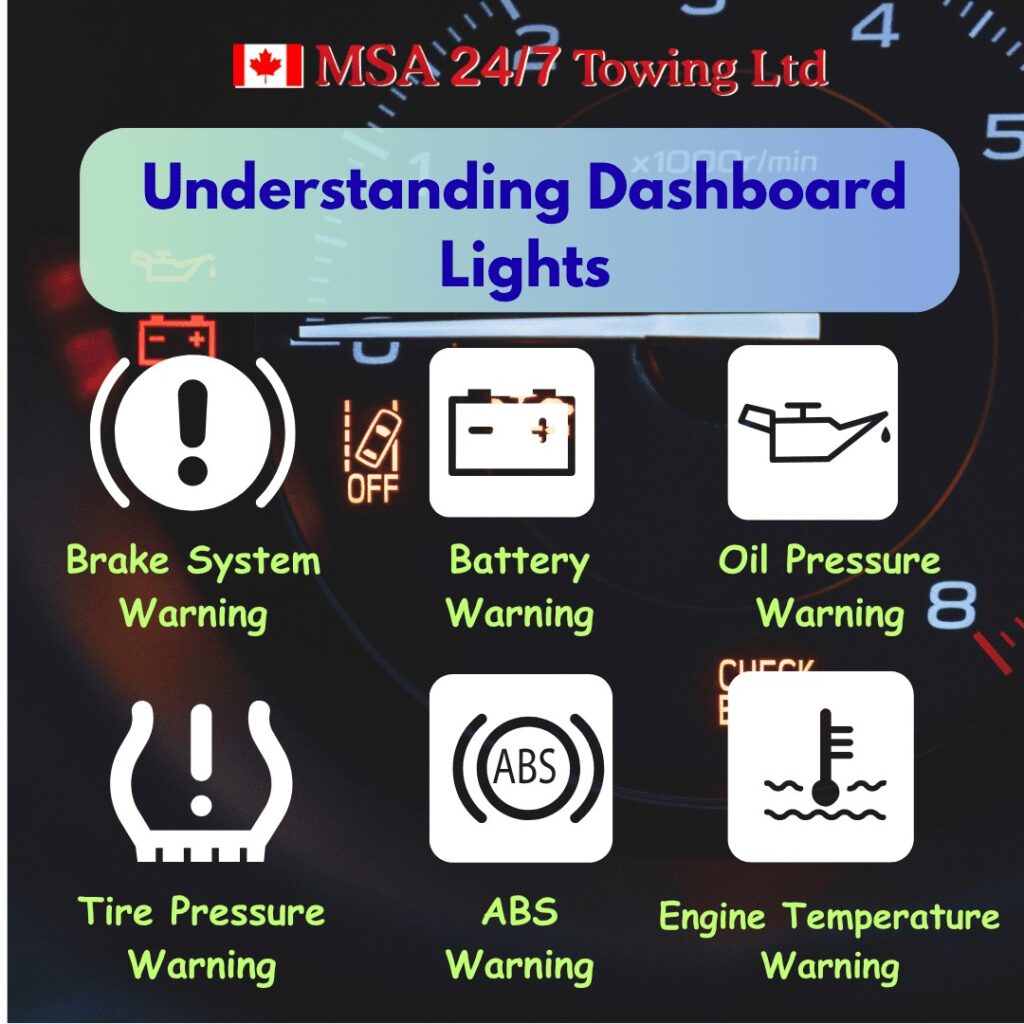
1. Oil Pressure Warning Light
What it looks like: A red oil can icon, sometimes with a drip, or it may simply say “OIL.”
What it means: This light signals your engine is losing oil pressure. Since oil lubricates your engine’s moving parts, low pressure can quickly cause severe damage.
Why it’s critical: Driving without proper oil pressure can result in permanent engine damage within minutes.
What to do: If this red oil can- symbol lights up, pull over safely, turn off your engine immediately, and contact an emergency towing service provider. Quick professional help can prevent costly repairs.
2. Engine Temperature Warning Light
What it looks like: A red thermometer icon submerged in liquid, or sometimes “TEMP.”
What it means: Your engine is overheating, which can happen due to low coolant, radiator issues, or other mechanical problems.
Why it’s critical: Continuing to drive risks damaging engine parts or causing total engine failure.
What to do: Stop driving, let the engine cool (do not open the radiator cap), and call for a tow to transport your vehicle safely.
3. Brake System Warning Light
What it looks like: A red circle with an exclamation mark inside, or the word “BRAKE.”
What it means: There’s an issue with your braking system, such as low brake fluid, worn pads, or system failure.
Why it’s critical: Faulty brakes greatly increase the risk of accidents.
What to do: If this light appears and you notice changes in braking, pull over safely and call for trusted towing service.
4. Battery/Charging System Warning Light
What it looks like: A red battery symbol or the letters “ALT” indicating alternator issues.
What it means: Your car’s battery isn’t charging properly, possibly due to alternator or battery failure.
Why it’s critical: Electrical failure can leave you stranded without warning.
What to do: Don’t wait until your car stalls. Contact a reliable Abbotsford towing company immediately when this light appears.
5. Multiple Red Lights or Additional Symptoms
If you notice several red warning lights at once, or if you hear unusual noises, smell something burning, or see smoke, treat the situation as urgent. Safely stop your vehicle and call for professional assistance without delay.

Yellow/Orange Lights: Warnings to Watch, But Not Always Immediate Emergencies
While red dashboard lights mean stop immediately, yellow or orange lights are more like your car’s way of saying, “Heads up, something needs attention soon.”
These warning lights signal possible issues that may become serious if ignored, but don’t always require pulling over right away. However, depending on how the light behaves and what you notice, you might still need to call for a towing service in Abbotsford or schedule roadside assistance before the problem becomes a serious matter.
Let’s look at some common yellow/orange warning lights and what they mean for you and your vehicle:
1. Check Engine Light
What it looks like: A yellow or orange outline of an engine, often labeled “CHECK ENGINE.”
What it means: Your vehicle’s computer has detected a problem, ranging from minor issues like a loose gas cap to more serious engine or emission system troubles.
The key distinction:
- Solid light: Usually means you can safely drive to a mechanic for inspection.
- Flashing light: Signals a more severe problem that could damage your engine quickly.
What to do: If it’s flashing, pull over when safe and call for emergency towing. If solid, you can schedule a tow to your preferred mechanic or dealership to have it checked.
2. Tire Pressure Warning Light
What it looks like: An exclamation mark inside a horseshoe-shaped icon representing a flat tire.
What it means: One or more tires have low air pressure.
Why it matters: Driving with low tire pressure can affect handling, fuel efficiency, and cause premature tire wear.
What to do: Pull over and check your tires. If you can safely inflate the tire, you might be able to drive to a tire shop. If not, or if you are unsure, calling for roadside assistance is the safest option.
3. Low Fuel Warning Light
What it looks like: A yellow gas pump icon.
What it means: Your fuel level is low and you should refuel soon.
What to do: Not an emergency, but don’t ignore it for long; running out of gas can leave you stranded and needing a tow.
4. Traction Control / ABS Warning Light
What it looks like:
- Traction Control: A yellow icon of a car with wavy skid marks underneath it.
- ABS: The yellow letters “ABS” inside a circle.
What it means:
- These lights are connected to your vehicle’s safety systems. The traction control system helps you stay stable on slippery or uneven roads, while the anti-lock braking system (ABS) helps prevent your wheels from locking up during sudden braking.
- When either light comes on, it usually means the system has been switched off or there’s a malfunction.
What to do:
- If you’re driving in dry, normal conditions, you can usually continue with caution, just be extra aware that your car may not respond as safely in sudden stops or poor weather.
- But if you’re noticing issues with braking, reduced traction, or strange handling, especially on hills or winding roads.
- It’s best to pull over safely and call for roadside assistance in Abbotsford. Your safety should always come first, and we’re here to help if you’re unsure.
Beyond the Tow: What to Do After a Dashboard Warning Light Appears
Whether it’s a sudden red warning or a persistent yellow light, knowing what to do after the alert appears is just as important as recognizing it in the first place.
So, you’ve seen the light. Now what?
Here’s a simple step-by-step approach to help you stay safe, avoid stress, and get your vehicle where it needs to go, whether that’s your home, your trusted mechanic, or the dealership.
1. Prioritize Your Safety
If you’re driving when a warning light comes on, especially a red one- don’t panic, but don’t ignore it either. Your priority is to pull over safely.
- Choose a visible, secure spot away from traffic if possible (shoulder of the road, parking lot, or a side street).
- Turn on your hazard lights so others can see you clearly.
- Stay inside your vehicle if it’s not safe to exit, especially on busy roads.
2. Assess the Situation
Take a breath and check for any obvious signs of trouble:
- Is there smoke coming from under the hood?
- Do you hear any strange sounds?
- Are there multiple lights flashing at once?
If anything feels off or unsafe, it’s best not to drive the vehicle any further. That’s where calling a professional towing service in Abbotsford makes all the difference.
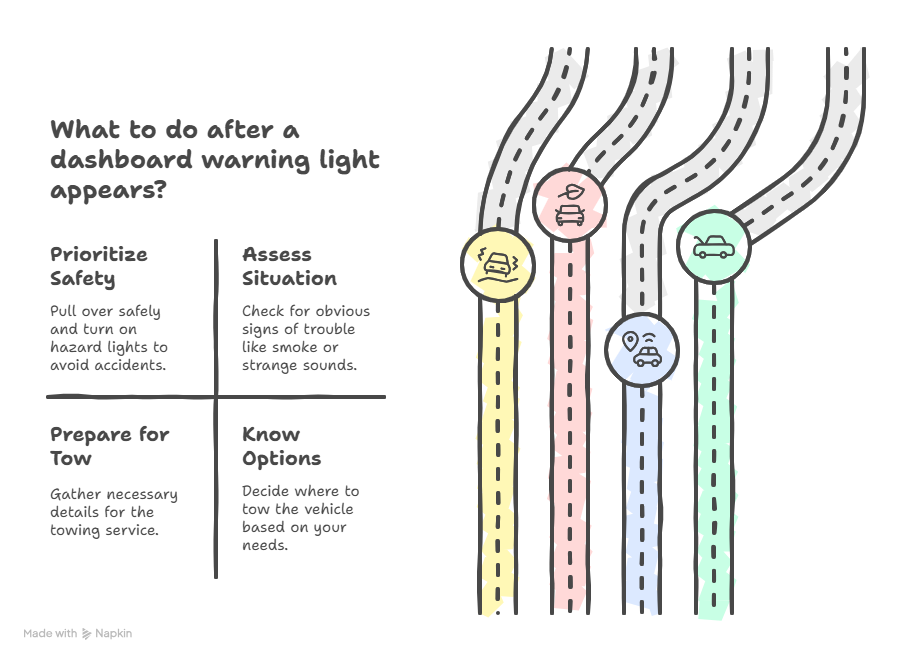

3. Prepare for the Tow
Before you call, gather a few key details. This helps our dispatch team send the right truck with the right equipment:
- Your exact location (check your GPS or use a nearby business as a landmark)
- Vehicle make, model, and colour
- The nature of the issue (e.g., “Engine overheating” or “Check engine light flashing”)
- Where do you want the vehicle to go (home, mechanic, dealership)
Once we have this, we’ll take it from there, quickly and professionally.
4. Know Your Options
One of the biggest advantages of calling a roadside assistance service provider is flexibility. You don’t have to figure everything out on the spot.
We can:
- Tow your vehicle to your home if you’d rather arrange repairs later
- Take it directly to your regular mechanic or auto shop
- Drop it at a local dealership if your vehicle is under warranty
You stay in control, and the service provider just helps make the process smoother and safer.
Conclusion
Dashboard lights aren’t just annoying, they’re your vehicle’s way of letting you know something’s off. Some warnings are harmless if handled in time, but others can signal serious trouble that calls for quick action.
That’s why having access to a reliable towing service in Abbotsford matters. Whether it’s an overheating engine, a flashing check engine light, or brake system trouble, knowing when to pull over and call for help can save you from bigger problems down the road.
The next time a warning light pops up and you’re not sure what to do, don’t stress. Help is just a call away. Reach out to MSA 24/7 Towing Ltd. at 604-870-8697, and we will be there for your assistance whenever you want.
FAQs
Q1. Can I drive short distances with a warning light on if the car feels fine?
A: It’s tempting, especially if everything seems normal, but warning lights are triggered for a reason. Even if your car feels okay, driving with certain alerts (especially red ones) can make things worse. When in doubt, it’s safer to stop and call for help.
Q2. Will roadside assistance always tow me, or can they fix the problem on the spot?
A: Not every issue means a tow. In many cases, like low tire pressure or a dead battery, roadside assistance can get you moving again without a full tow. But if there’s a serious issue or safety risk, towing is the better option.
Q3. What should I do while waiting for a tow truck in Abbotsford?
A: Stay visible and safe. Turn on your hazard lights, stay inside your vehicle (if it’s safe to do so), and have your location info ready. If you’re on a quiet road or unfamiliar area, it’s okay to call a friend or let someone know where you are.