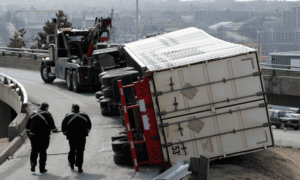
The holiday season is an exciting time in the Fraser Valley – roads are busier than usual as families travel, shoppers move between malls, and friends catch up for festive gatherings. But winter weather in Abbotsford can make even a short drive unpredictable. Freezing rain, occasional snow, and fog can turn familiar roads into tricky situations in an instant.
This is where understanding towing in Abbotsford becomes essential. Knowing how local towing and roadside assistance operate during the holidays can save time, stress, and sometimes even your safety.
According to ICBC data, December is one of the most dangerous months for B.C. drivers, with nearly 35 crashes reported every hour across the province. This increased risk is felt directly on Fraser Valley roads, including busy local routes and rural stretches alike.
Why Towing Calls Increase in Abbotsford During the Holidays
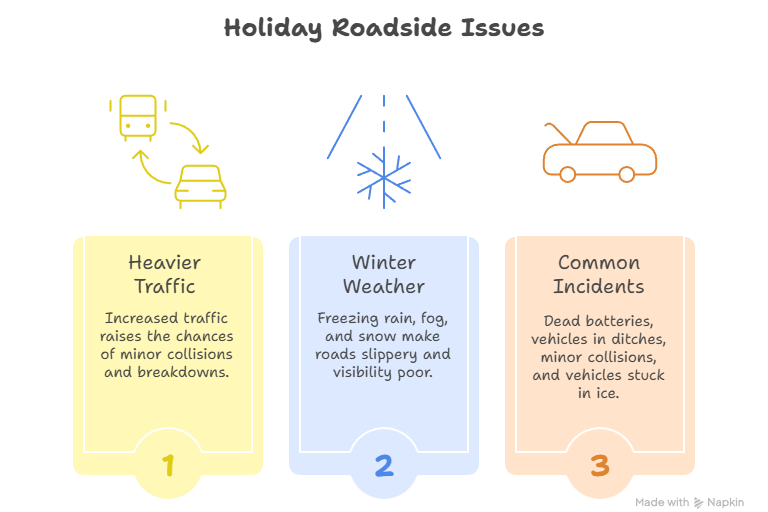
1. Heavier Traffic and Holiday Hustle
During the holiday season, roads are busier than usual. From last-minute shopping trips to family visits across the Fraser Valley – including Chilliwack, Langley, and Vancouver – the increased traffic naturally raises the chances of minor collisions, breakdowns, and other roadside issues.
In Abbotsford specifically, areas like the High Street Shopping Centre and the nearby Mt. Lehman Road/Highway 1 interchange see predictable congestion and minor fender-benders starting the second week of December. The increased traffic particularly affects major arteries like the Trans-Canada Highway (Highway 1), Sumas Way, and the Abbotsford-Mission Highway, where even small incidents can quickly create delays.
2. Winter Weather Challenges
Abbotsford experiences a mix of winter conditions, including freezing rain, fog, and occasional snow. These conditions can make roads slippery and visibility poor, especially at night. Sudden temperature drops can also catch drivers off guard, leading to vehicles sliding off rural roads or getting stuck in snow and ice.
3. Common Holiday Incidents
Some of the incidents that frequently lead to calls for tow truck services include:
- Dead or drained batteries
- Vehicles stuck in ditches
- Minor collisions on busy roads
- Vehicles immobilized by ice or snow
By knowing what to expect, you can reduce the stress if an incident occurs and be better prepared to contact roadside assistance in Abbotsford.

Common Winter Roadside Problems Drivers Face
Winter can bring specific challenges even if Abbotsford doesn’t receive heavy snowfall. Local drivers often experience:
1. Battery Failures
Cold temperatures drain car batteries faster. Many drivers require a battery boost, especially early in the morning or after leaving a vehicle parked overnight.
2. Vehicles Sliding or Getting Stuck
Even small patches of ice can cause cars to slide into ditches or off the road. Quick recovery often requires specialized equipment and experience.
3. Tire and Engine Issues
Low tire pressure, worn tires, or frozen locks are common winter annoyances. Drivers might notice reduced traction or difficulty starting their engines in cold conditions.
By understanding these common problems, you can anticipate potential issues before they turn into emergencies.
How Towing Services Operate Differently During the Holiday Season
During the holiday season, towing companies face unique challenges. Roads are busier, winter conditions make travel unpredictable, and emergencies can happen at any hour. Knowing how towing services operate differently during this time can help drivers feel prepared and confident.
1. 24/7 Availability for Peace of Mind
Holiday traffic often extends into late nights and early mornings, and winter conditions like icy patches or fog can make driving riskier. Local towing companies maintain round-the-clock service so help is always within reach. This ensures that if your vehicle fails on a slippery road or in a rural area, assistance is available quickly.
2. Winter-Ready Equipment
Winter driving requires more than a standard tow truck. Tow vehicles are often equipped with:
- Winches to pull cars out of ditches or snowbanks
- Flatbeds for safe transport of low-clearance or damaged vehicles
- Traction tools and chains for slippery roads
- Extra lighting for early morning or evening recoveries
Having properly equipped tow trucks ensures safe recovery when vehicles get stuck in snow, ice, or slush.
3. Faster Response Times with Local Knowledge
A towing company familiar with local roads can reach stranded drivers faster. They know busy streets, tricky intersections, and rural shortcuts that outsiders might miss. During winter, this local expertise is invaluable for safe and timely assistance.
What to Do If You Need a Tow During a Snowstorm or Winter Emergency
When winter strikes, safety is the most important priority. Here’s how to handle a roadside emergency:
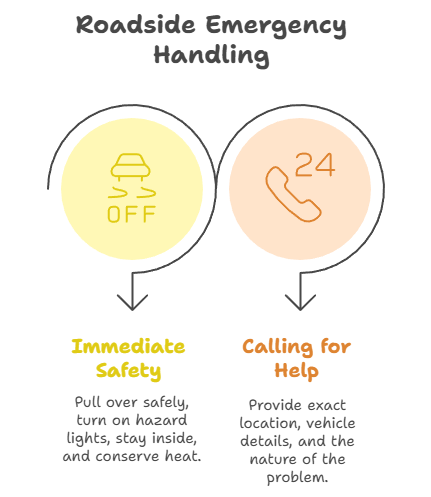
1. Immediate Steps for Safety
- Pull over safely to the shoulder or a well-lit area.
- Turn on hazard lights to alert other drivers.
- Stay inside the vehicle unless conditions make it unsafe.
- Conserve heat and fuel by running the engine intermittently.
2. Calling for Help
Provide your towing company with clear details:
- Exact location: (mention nearby landmarks when possible: “just past the Abbotsford International Airport entrance on Mt Lehman Road” is more precise than “Mt Lehman Road”)
- Vehicle type and condition
- Nature of the problem (e.g., stuck in a ditch, dead battery)
Local roadside assistance can reach you faster, especially during busy holiday periods or snowstorms.

Winter Safety and Preparedness Tips
Being prepared for winter conditions can make driving safer and reduce stress if unexpected issues occur. Local towing companies see that drivers who plan ahead often have an easier experience on the road. Here’s how to be ready:
a) Winter Kit Essentials
Keeping a small winter kit in your car can make waiting for assistance safer and more comfortable:
- Blankets and warm clothing
- Gloves and hats
- Phone charger or power bank
- Sand, kitty litter, or traction mats for extra grip
b) Proactive Vehicle Checks
Simple steps before heading out can prevent common winter problems:
- Check tire tread and maintain proper pressure. (Note: BC law requires tires to have at least 3.5 mm tread depth on designated routes.)
- Inspect your battery, as cold weather can drain it faster
- Keep your fuel tank at least half full
- Replace worn wiper blades and use winter washer fluid
- Plan routes in advance and monitor weather conditions
These preparations don’t replace the need for professional towing when emergencies happen, but they help drivers stay safe and make it easier for tow trucks to reach them quickly and efficiently.
Conclusion: Stay Safe and Prepared This Holiday Season
Towing in Abbotsford during the winter holidays can be a lifesaver when unexpected situations arise on icy roads or busy streets. By understanding how local towing services operate, preparing your vehicle for winter conditions, and having a trusted contact on hand, you can travel with greater confidence and peace of mind.
Whether it’s a quick battery boost, a vehicle recovery from a ditch, or a standard tow, knowing you have reliable help nearby makes all the difference. Staying informed and ready ensures your holiday travels are safe, smooth, and stress-free.
FAQs
Q1. Are winter tires mandatory in Abbotsford?
A: Not in the immediate Lower Mainland, but highly recommended for cold snaps. On most major highways outside Abbotsford (e.g., Hope, Merritt, mountain routes), winter tires are required from October 1 to April 30. Legal tires must have the Mountain/Snowflake symbol or M+S and at least 3.5 mm tread.
Q2. Does ICBC cover roadside assistance or towing?
A: Basic Autoplan does not cover general roadside assistance. Optional Roadside Plus reimburses up to $50 per qualifying non-accident emergency, like a battery boost or tow.
Q3. What is the difference between towing and recovery services?
A: Towing moves a disabled vehicle from an accessible location (like a road or parking lot). Recovery involves extracting vehicles from ditches, snow, or accident sites and requires specialized equipment, making it more complex and costly.
Q4. How is the cost of towing typically calculated?
A: Fees usually include a base hook-up charge plus a per-kilometer rate. Extra charges may apply for winching, after-hours/holiday service, or storage if the vehicle cannot be immediately dropped off.
Q5. What is a “Drop Charge” and can I avoid it?
A: A Drop Charge is applied if the tow truck is hooked up and you request the vehicle to be released before transport. In breakdowns or accidents, you should only pay the agreed-upon towing fee with your chosen provider.