

Moving construction machinery from one job site to another isn’t always easy. Some machines are too big to drive on public roads. Others may break down while working or need to be moved to a new location.
That’s when construction equipment towing can help. It allows businesses to move machinery using the right truck and transport equipment.
For construction companies and equipment rental businesses in Abbotsford and nearby areas, knowing how to prepare machinery and move it safely can save time and prevent problems. Let’s look at the types of machines that can be moved, how to prepare them, and what to know about safety.
Types of Machinery That Can Be Moved with Construction Equipment Towing
Construction sites use different machines for digging, lifting, and moving materials. Each machine has its own transport needs, depending on its size, weight, and condition.
1. Excavators
Excavators are machines used for digging holes, trenches, and foundations. Smaller models and larger excavators may need special trailers to move them safely. Before moving an excavator, share its weight and size with the towing provider. Let them know about its bucket, arm, and any other attachments.
2. Skid Steers and Compact Track Loaders
These small machines are used for moving soil, clearing land, and working in tight spaces. Construction and landscaping companies often move them between job sites. Even though they’re smaller than many other construction machines, they still need the right transport equipment. Tell the provider if the machine is working properly or has any attachments.
3. Bulldozers and Wheel Loaders
Bulldozers push soil and level land, while wheel loaders lift and move materials. Because these machines can be large and heavy, they may need special trailers. Using the right transport equipment helps keep the machine secure during the trip.
4. Forklifts, Telehandlers, and Backhoes
Forklifts and telehandlers help lift and move materials. Backhoes are used for digging and other construction jobs. Forklift towing may be needed when a forklift breaks down, requires repairs, or needs to be moved to another work location. The appropriate transport method depends on its weight, dimensions, condition, and loading requirements.
For forklifts, telehandlers, and backhoes, provide clear details about the machine and its attachments before arranging transport.
How to Prepare Construction Equipment for Transport
A little preparation can help make the move easier and avoid delays.
1. Share the Important Details
When booking construction equipment towing, provide:
- Machine details: Its type, model, weight, and size.
- Pickup and delivery locations: Where the machine needs to be collected and delivered.
- Machine condition: Tell the provider if it won’t start or has other problems.
- Attachments: Mention buckets, forks, or other parts that need to be moved.
- Site access: Explain whether the entrance is narrow or the ground is muddy or uneven.
These details help the provider understand what is needed for the job.
2. Check Attachments and Loose Parts
Some machine parts may need to be removed or secured before transport. Check for loose tools and items that could fall off during the trip. Follow the machine maker’s instructions and the towing provider’s advice. Don’t assume every attachment can stay in place.
3. Prepare the Pickup and Delivery Areas
Make sure the transport truck can reach both places where the machine will be picked up and dropped off. Narrow entrances, muddy ground, steep slopes, low branches, and small spaces can make it harder to load or unload the machine.
Before the move, check both locations for anything that could cause a problem. Tell the towing provider about narrow gates, uneven ground, or limited space. Construction sites in Abbotsford and nearby areas can have different access conditions. Sharing this information early helps the provider prepare for the move and avoid delays
4. Explain Any Problems
If the machine won’t start or has damaged wheels, tracks, brakes, or steering, explain this when booking. The provider can then decide how to move the machine safely. Sharing this information early can also help prevent delays.
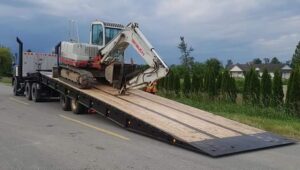

Important Safety Tips for Moving Heavy Machinery
Heavy equipment towing takes careful planning. Using the wrong equipment or failing to secure a machine can put workers, drivers, and the equipment at risk.
1. Use the Right Truck and Trailer
The truck and trailer must be strong enough and large enough for the machine. A machine may fit on a trailer but still be too heavy for it. Provide accurate details about your equipment so the provider can choose a suitable setup.
2. Secure the Machine Properly
Heavy machinery must be tied down or secured so it doesn’t shift during the trip. The way it is secured should suit the machine and meet safety rules. Loading and unloading should be done carefully by trained people using the right equipment.
3. Check Roads and Permit Rules
Some machines are too wide, tall, or heavy for regular road limits. In British Columbia, certain loads may need special permits or approved routes. Check the rules before moving the machine. The BC government’s commercial transport permit guide explains the requirements.
4. Consider Weather and Ground Conditions
Rain and mud can make it harder to load machinery, especially on construction sites. Check the ground and access area before the truck arrives. Good communication between the machine operator, site manager, and towing provider helps everyone prepare for the move.
What Affects the Cost of Construction Equipment Towing?
The cost of moving construction equipment can vary depending on a few things. Knowing what affects the price can help you plan your budget and get a better quote.
Some of the main factors include:
- Machine size and weight: Large and heavy machines may need bigger trucks or special trailers to move them safely.
- Travel distance: Moving a machine a short distance may cost less than moving it to another city.
- Machine condition: If the machine won’t start or move, extra equipment or special arrangements may be needed.
- Pickup location: Narrow entrances, muddy ground, or limited space can make it harder to load the machine.
- Permits and road rules: Some large or heavy loads need special permits, which may add to the cost.
When asking for a quote, tell the towing provider what machine needs to be moved, where it is located, and where it needs to go. Also, explain any problems with the machine or pickup area. Ask what the price includes and whether you may need to pay any extra fees.
Choosing a Construction Equipment Towing Service in Abbotsford
When choosing a towing provider, look for a team that knows how to move heavy machinery safely. Ask whether they can move your machine and what information they need to give you a quote. Discuss the pickup time, delivery location, and any problems at either site.
Before booking, explain where the machine is parked and whether the truck can reach it easily. Let the provider know if there is enough space to load and unload the machine. Sharing these details ahead of time can help prevent problems on moving day.
Frequently Asked Questions
1. What types of machinery can be moved with construction equipment towing?
Excavators, skid steers, bulldozers, wheel loaders, forklifts, telehandlers, backhoes, and other machines may be moved using suitable transport equipment.
2. Can a broken-down machine be moved?
Yes. A suitable towing or transport service may be able to move a machine that won’t start. Explain the problem when booking so the provider can plan the right approach.
3. How should I prepare my machine for transport?
Share its weight and size, mention any attachments, explain problems, and make sure the pickup area is accessible. Follow the towing provider’s instructions.
4. Do I need a permit to move heavy machinery in BC?
Some loads need special permits because of their size or weight. The rules depend on the machine and the route, so check the requirements before transport.
Conclusion
Moving heavy machinery is easier when you plan ahead, share the right details, and use suitable transport equipment. Taking these steps can help reduce delays and make the move safer.
Need construction equipment towing in Abbotsford or nearby areas? Contact MSA 24/7 Towing Ltd. to discuss your needs and request a quote.